Expert Water Heater Installation in Austin: A Homeowner’s Buying Guide

That standard water heater in your garage might seem like a reliable old friend, but it is likely the primary driver behind your rising utility bills and constant worry about a sudden leak. Investing in a professional water heater installation Austin homeowners can depend on is about more than just swapping out a tank. It is about engineering a system that stands up to Central Texas's notoriously hard water while strictly adhering to local plumbing codes. You are likely tired of the "lukewarm surprise" in the shower or the confusion of trying to understand which modern unit actually fits your home's footprint.
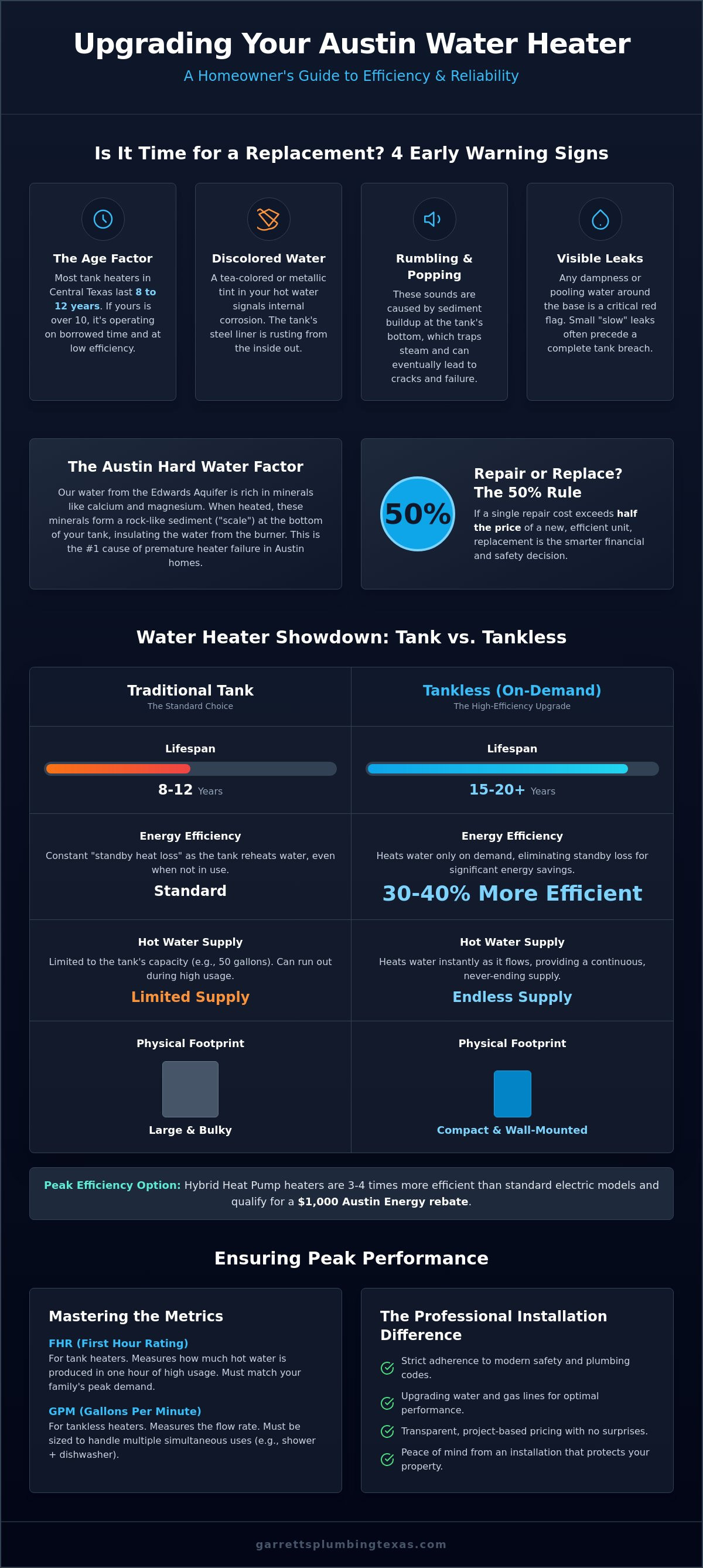
We believe you deserve a home that runs with quiet efficiency and total reliability. This guide provides the technical clarity you need to find a high-efficiency solution that delivers endless hot water for your family. We'll compare modern tankless options with hybrid heat pump models and explain how to secure the current $1,000 Austin Energy rebate. You will learn how to achieve lower monthly energy costs and gain the peace of mind that comes from a professional, code-compliant installation that protects your property for years to come.
Table of Contents
Signs Your Austin Home is Ready for a Water Heater Replacement
Most homeowners view their water heater as a "set it and forget it" appliance until the morning they are met with an icy spray in the shower. While these systems are designed for durability, they aren't immortal. In Central Texas, environmental factors often dictate the lifespan of your equipment. Recognizing the early warning signs of a failing unit can save you from the stress of an emergency and the high costs of water damage. When you begin considering a professional water heater installation Austin project, it's best to start by evaluating the current state of your system.
The Age Factor: Most traditional tank systems in our area have a predictable service life of 8 to 12 years. If yours is approaching or has passed the double-digit mark, it's likely operating at a fraction of its original efficiency.
Rusty or Discolored Water: If your hot water has a metallic smell or a tea-colored tint while the cold water remains clear, the internal sacrificial anode rod has likely failed. This leads to the tank's steel liner corroding from the inside out.
Unusual Noises: Do you hear popping, banging, or rumbling coming from the closet or garage? These sounds occur when sediment at the bottom of the tank traps steam bubbles. This forces the burner to work harder and eventually cracks the tank.
Visible Moisture: Any pooling water or dampness around the base of the heater is a red flag. Small "slow" leaks often precede a total tank breach.
The Austin Hard Water Factor
Our local water supply primarily comes from the Edwards Aquifer, which is rich in calcium and magnesium. While these minerals are safe to drink, they are the primary cause of "scaling" inside your plumbing. As water heats up, these minerals crystallize and settle at the bottom of your tank, creating a thick layer of insulation between the burner and the water. This sediment buildup is the leading cause of premature failure in local homes. You can learn more about how these minerals impact your entire home in our guide to hard water plumbing problems.
Repair vs. Replace: The 50% Rule
Deciding whether to fix an old unit or invest in a new one often comes down to simple math. We generally recommend the "50% Rule." If the cost of a single repair exceeds half the price of a new unit, it is time to move on. Beyond the finances, there is the matter of safety. A failing internal liner cannot be patched; it is a structural hazard that can lead to significant property damage. Understanding the different types of water heaters available today can help you choose a replacement that offers better longevity. Making sure your water heater installation Austin is handled by a professional ensures that your new system is built to survive our local water chemistry for years to come.
Comparing Systems: Traditional Tank vs. Tankless Water Heaters
Choosing between a traditional tank and a modern tankless system is the most significant decision you will face during a water heater installation Austin project. There is no "one size fits all" answer. The right choice depends on your household's peak water demand, your long-term budget, and even the specific layout of your utility closet. Traditional tanks remain the standard choice for many. They offer a lower upfront cost and a straightforward installation process. While modern tanks have improved significantly with thicker insulation to reduce standby heat loss, they are still limited by their storage capacity. Once that 50 gallon tank is empty, your family is stuck waiting for the recovery cycle.
Tankless systems, often called on-demand heaters, provide a different experience by heating water only when you turn on a tap. This technology offers an endless supply of hot water and a much smaller physical footprint. These units are about the size of a suitcase and mount directly to the wall. This allows you to reclaim valuable square footage in tight laundry rooms or closets. While the initial investment is higher, these systems are 30% to 40% more energy-efficient than traditional models and can last 15 to 20 years with proper care. For those seeking the absolute highest efficiency, hybrid heat pump water heaters are an excellent alternative. These units are three to four times more efficient than standard electric heaters and thrive in the warm environments of Texas garages and attics.
Is Tankless Right for Your Household?
Before you commit to tankless technology, you must consider your home's infrastructure. Many older Austin neighborhoods have gas lines or electrical panels that were not designed for the high BTU or amperage requirements of on-demand heating. Upgrading these lines is a common part of the process that many generic guides overlook. You also need to account for your family's habits. If you frequently run the dishwasher, the washing machine, and two showers simultaneously, you will need a high-capacity unit. Maintenance is another local reality. Because of the mineral content in our water, tankless units require professional descaling once a year to prevent the heat exchanger from clogging with calcium. If you're unsure which path fits your home's bones, a professional water heater consultation can clarify your technical requirements.
Energy Star Ratings and Long-Term ROI
The financial landscape for water heaters changed significantly in 2026. It's vital to know that the federal Section 25C tax credits expired at the end of 2025. This means there are currently no federal tax incentives for new installations this year. However, local support remains strong. Austin Energy offers a $1,000 rebate for qualifying ENERGY STAR certified hybrid heat pump models. This local incentive makes high-efficiency upgrades much more accessible. When you combine these rebates with the monthly savings on your utility bills, the long-term return on investment becomes very clear. Modern high-efficiency units pay for themselves through reduced energy consumption while providing the reliable performance a busy Texas home requires.
Sizing Your New Water Heater for Peak Performance
Getting the size right is a precision task that goes beyond simple tank capacity. When planning your water heater installation Austin, you must evaluate how your family actually uses water during the busiest hour of the day. For traditional tank systems, we look at the First Hour Rating (FHR). This metric tells you exactly how many gallons of hot water the unit can deliver in a single hour starting from a full tank. For tankless systems, the calculation shifts to Gallons Per Minute (GPM). This is vital for modern Austin homes featuring high-flow rainfall showerheads or large garden tubs that require a high volume of water delivered instantly.
It is a common mistake to assume that bigger is always better. An oversized unit leads to standby heat loss in tank models and unnecessary fuel consumption in tankless ones. We focus on finding the "sweet spot" that meets your peak demand without wasting energy. If you're planning for a growing family or a future home addition, we factor that into the initial design to ensure your investment serves you for the next decade. A properly sized system maintains consistent temperatures even when multiple taps are running at once.
Matching Unit Capacity to Austin Home Sizes
The layout of your neighborhood often influences the best configuration for your home. A two-bathroom bungalow in Pflugerville typically thrives with a standard 40 or 50 gallon tank or a mid-range tankless unit. However, multi-story homes in Round Rock or Georgetown often face different challenges. In these larger floor plans, the distance between the heater and the master suite can lead to significant heat loss and long wait times. We often recommend a primary unit supplemented by "point-of-use" heaters for remote guest suites to ensure everyone has instant access to hot water without the wait.
Fuel Source Availability
Your home's existing infrastructure is the final piece of the puzzle. Converting from an electric system to a gas one is a common request, but it requires careful logistical planning. This process involves running new gas lines and installing specialized venting. High-efficiency gas units produce cooler, acidic exhaust that requires dedicated PVC piping rather than standard metal flues. If you opt for a high-efficiency heat pump heater, we must ensure your electrical panel can handle the 220V requirement and that the installation site has enough cubic footage for proper airflow. A thoughtful water heater installation Austin takes these technical hurdles into account before the first tool ever touches a pipe.
The Professional Installation Process: What to Expect
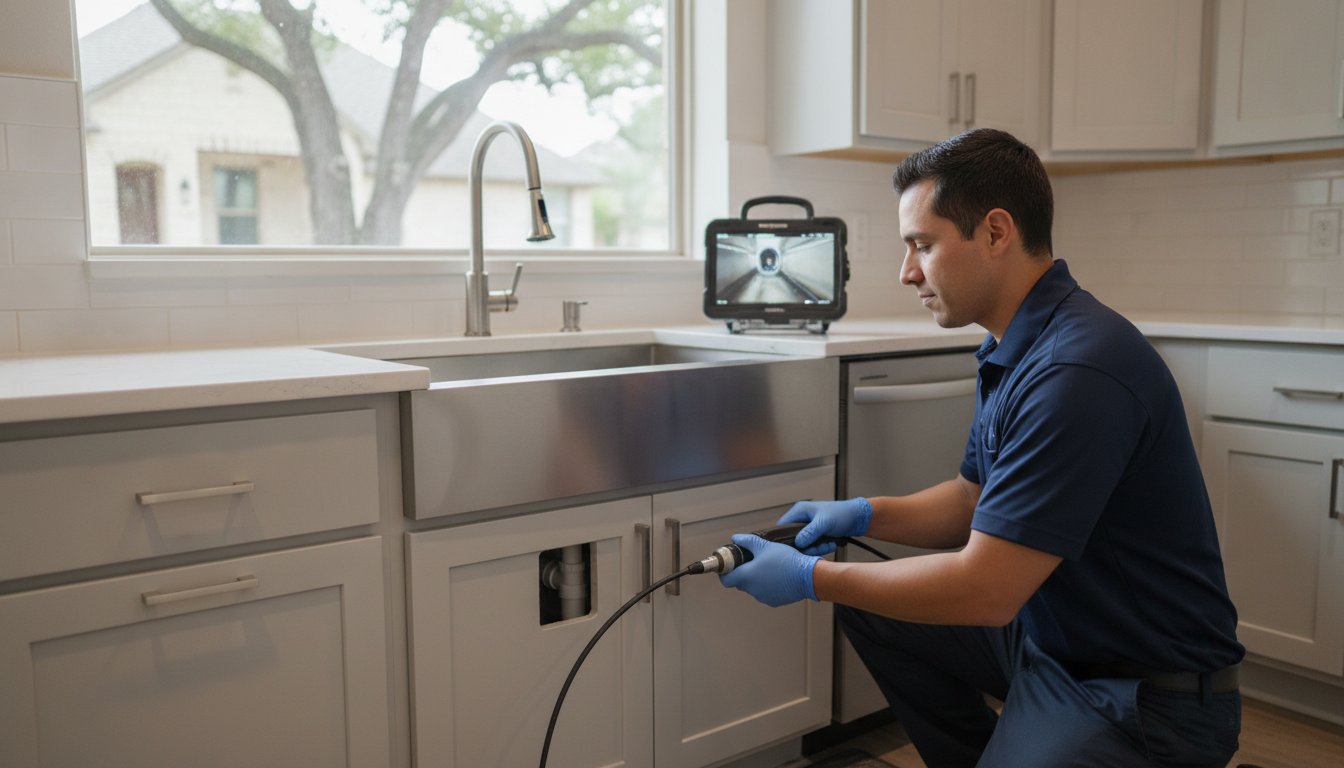
A professional installation is a methodical sequence designed to protect your home and your family. While some may prioritize speed, we believe that doing things the right way is the only way to ensure long-term reliability. When you schedule a water heater installation Austin homeowners can trust, the process begins with a careful drain and removal of your existing unit. This is not just about hauling away old metal; it is about ensuring your utility space is clean and ready for a modern upgrade. We take this opportunity to inspect the surrounding area for any signs of hidden structural damage or moisture issues.
Once the old unit is clear, the real craftsmanship begins. Our team focuses on the following critical steps:
Line Upgrades: We replace aging water lines and shut-off valves with modern, high-quality components to prevent future leaks at the connection points.
Thermal Expansion Tanks: Most local plumbing codes now require these small tanks. They absorb the pressure created when water expands as it heats, protecting your pipes and the water heater's internal liner from stress fractures.
Safety Calibration: We carefully calibrate the temperature and pressure (T&P) relief valves. This is a vital safety feature that prevents the tank from becoming a hazard in the event of a thermostat failure.
Venting and Leak Testing: For gas units, we perform rigorous testing of the exhaust system to eliminate carbon monoxide risks. We then verify every connection point to ensure a completely watertight system.
Austin Permits and Plumbing Codes
In the City of Austin, a licensed plumber must pull a permit for any water heater replacement. This isn't just bureaucratic red tape; it is a safety standard that ensures your installation meets the International Plumbing Code. This process includes specific requirements for pan drains to catch potential leaks and proper strapping to secure the unit. Skipping the permit process is a significant risk. Unpermitted work can void your home insurance policy if a failure occurs, leaving you responsible for thousands of dollars in water damage repairs. We handle the paperwork and inspections so you know your home is fully compliant and protected.
Protecting Your Investment
Installation day is just the beginning of your system's life. To fight back against Central Texas minerals, we recommend installing sediment traps on all new gas lines. These simple devices catch debris before it can enter your heater's delicate burner assembly. We also ensure your unit has a functional sacrificial anode rod, which acts as a lightning rod for corrosion, protecting the steel tank from rust. For ongoing peace of mind, you can also look into our expert leak detection services to monitor your home's plumbing health. If you are ready to upgrade to a safer, more efficient system, contact us to schedule your water heater installation Austin service today.
Why Austin Trusts Garrett’s Plumbing for Water Heater Upgrades
Choosing the right team for your water heater installation Austin project is just as critical as selecting the unit itself. Many large corporate franchises treat plumbing as a high-volume transaction. They often send out entry-level technicians who are incentivized by sales commissions rather than the long-term performance of your system. We take a different approach. At Garrett’s Plumbing, we operate with the understanding that our reputation is built one home at a time. We provide transparent, project-based pricing. This ensures you won't encounter hidden fees or high-pressure sales tactics. You receive a clear, upfront cost for a job done correctly the first time. We treat your property with the respect it deserves, ensuring every connection is secure and every local code is met. Our reach extends throughout Central Texas, serving families in Round Rock, Pflugerville, and as far south as San Marcos.
The Garrett & Ford Family Legacy
Ready for Reliable Hot Water?
If your current system is showing the signs of age or inefficiency, it is time for a professional assessment. Don't wait for a major tank breach to force your hand. Our family-operated team is ready to help you evaluate your home's specific needs. We'll help you navigate the latest high-efficiency technology to find the perfect fit for your family's daily routine. You deserve the peace of mind that comes from a code-compliant, expert installation that protects your investment for years to come. Experience the difference that a dedicated, local team can make for your home's comfort and safety. Contact Garrett’s Plumbing today for your Austin water heater installation.
Secure Your Home's Long-Term Comfort
Upgrading your water heater is an investment in your home's stability and your family's daily comfort. By recognizing the warning signs of a failing tank early, you avoid the chaos of an sudden emergency and the high costs of water damage. Whether you choose a high-efficiency tankless system or a reliable traditional model, the key to success is matching the unit's capacity to your specific household demand while accounting for the unique mineral content of Central Texas water. A professional water heater installation Austin project ensures that every valve, line, and thermal expansion tank meets the highest safety standards and local plumbing codes.
Garrett’s Plumbing brings over 27 years of experience to every job site. As a family-owned and operated team of licensed master plumbers, we take pride in serving our neighbors from Austin to New Braunfels with integrity. We don't believe in shortcuts; we believe in craftsmanship that lasts for generations. If you're ready to enjoy consistent hot water and lower energy costs, our team is here to guide you through the process with transparency and respect.
Get an Honest Quote on Your Water Heater Installation
Your home deserves a plumbing system built on a foundation of quality and technical precision. We look forward to helping you find the perfect high-efficiency solution for your family.
Frequently Asked Questions
How much does a new water heater installation cost in Austin?
The total cost for a new installation depends on the technology you select and the specific requirements of your home's infrastructure. Factors such as the unit's capacity, specialized venting for high-efficiency models, and necessary upgrades to gas lines or electrical panels will influence the final project price. We provide transparent, project-based quotes that cover the entire scope of work. This ensures you understand the full value of your water heater installation Austin project before any work begins on your property.
How long does it take to install a new water heater?
A straightforward tank-to-tank replacement usually takes between two and four hours to complete. If you are transitioning to a tankless system, you should expect the process to take a full working day. This upgrade is more complex because it requires mounting a new unit, installing specialized venting systems, and often modifying gas or water lines to support on-demand heating. We work methodically to ensure every connection is secure while minimizing the time your home is without water.
Can I switch from a tank water heater to a tankless one?
You can certainly switch to a tankless model, though it is not a simple swap. Most Austin homes require infrastructure modifications to handle the intense energy load of heating water instantly. This often includes installing a larger gas line or a dedicated electrical circuit. We evaluate your home's current capacity during our initial assessment to determine which technical upgrades are necessary to support a high-efficiency tankless system safely and effectively within your existing space.
Do I need a permit to replace my water heater in Austin, TX?
Yes, the City of Austin requires a plumbing permit for all water heater replacements to ensure the work meets the International Plumbing Code. This is a critical safety step that protects your home's insurance coverage and guarantees the installation is inspected by a qualified official. A licensed professional must pull this permit for your water heater installation Austin. This process verifies that essential safety features, like the temperature relief valve and thermal expansion tank, are installed correctly.
What is the most energy-efficient water heater for the Texas climate?
Hybrid heat pump water heaters are exceptionally efficient for the Central Texas environment. These systems work by moving heat from the surrounding air into the tank, making them three to four times more efficient than traditional electric units. Since our garages and attics remain warm for most of the year, these heaters have a constant energy source to draw from. This technology leads to significant monthly savings on your utility bills while providing reliable performance for your family.
How do I know if my water heater just needs a repair instead of replacement?
If your heater is under eight years old and the issue involves a specific part like a thermostat or heating element, a repair is usually the most practical choice. However, if the internal tank is leaking or you notice rust in your hot water, a replacement is necessary for safety. We generally suggest a full replacement if a repair cost exceeds half the price of a new unit. This "50% rule" helps you avoid throwing money at a failing system.
What is an expansion tank, and do I really need one?
An expansion tank is a safety device designed to protect your plumbing from the pressure created by thermal expansion. As water heats up, it expands in volume, which can stress your pipes and the water heater's internal liner. Most modern plumbing codes in our area now mandate these tanks for safety. It serves as a necessary buffer that prevents premature tank failure and protects your home's fixtures from the damage caused by high-pressure surges.
Does Garrett’s Plumbing offer emergency water heater replacement?
Yes, we provide emergency plumbing services to address sudden tank failures or major leaks that threaten your home. A burst water heater requires immediate professional attention to prevent extensive water damage to your property. Our team prioritizes these urgent situations to restore your hot water as quickly as possible. We maintain a steady and reliable presence during these emergencies, treating your home with the same care and respect we would show a neighbor.

Comments