Myth vs. Reality: Why Your DIY Clogged Drain Fix Might Be Costing You Thousands

Updated: Jul 12
That $15 bottle of chemical drain cleaner sitting under your sink might be the most expensive item you ever buy for your home. It’s a bold claim, but we’ve seen too many Austin homeowners trade a quick fix today for a massive sewer line collapse tomorrow. When you need a plumber clogged drain expert, it's often because a "simple" DIY solution backfired and caused hidden damage. We know how frustrating it is to deal with a sink that won’t drain or a foul odor that lingers in the kitchen, and it’s natural to want an immediate solution that protects your family’s comfort.
As a 4th-generation family business with 27 years of local experience, we believe in doing things the right way rather than the fast way. In this guide, we debunk the most dangerous myths about DIY plumbing and show you how to protect your home for the long haul. You will learn the truth about "flushable" wipes, the hidden risks of hardware store chemicals, and how to gain total confidence that your pipes are safe from internal corrosion. We want to help you move past recurring clogs and toward a permanent, reliable solution for your drainage issues.
Table of Contents
Myth 1: Chemical Drain Cleaners are a 'Safe and Easy' Fix
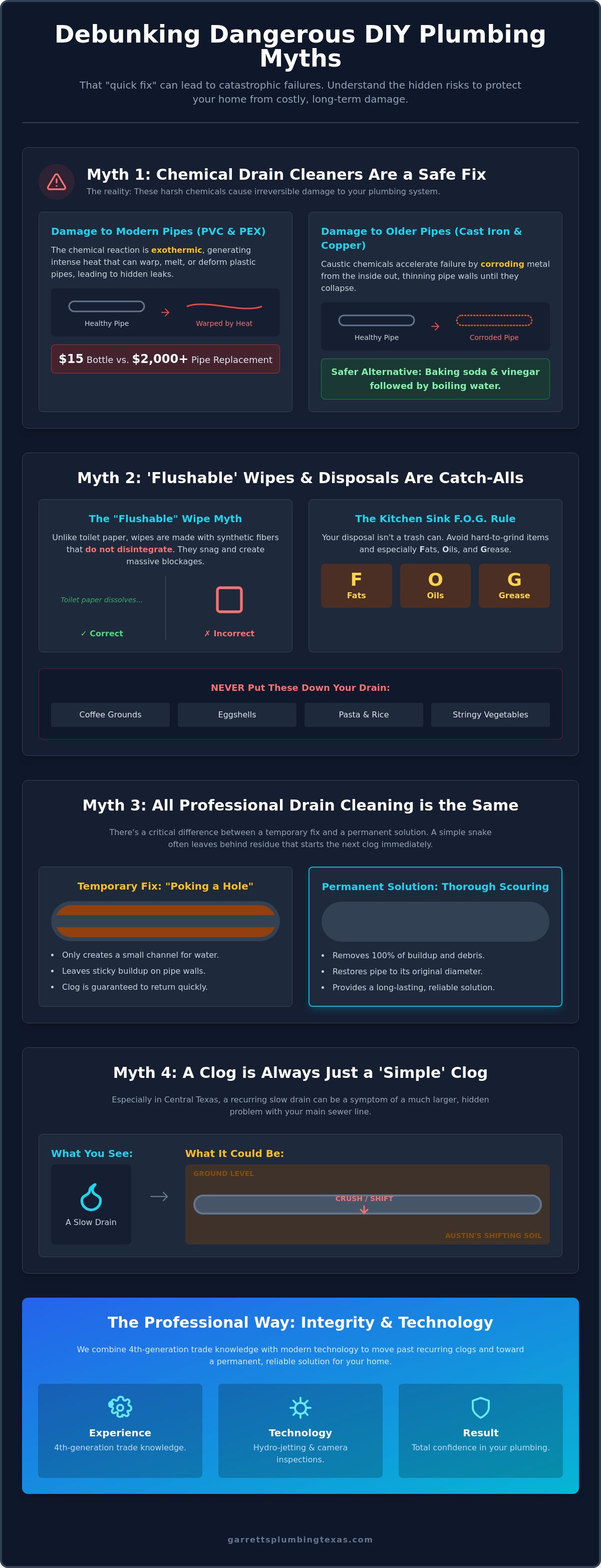
Walking down the cleaning aisle at a local Austin hardware store, it’s easy to believe that a bottle of liquid magic can solve your plumbing woes for under twenty dollars. The marketing promises a quick dissolve of hair and grease, but the reality is far more destructive. Chemical drain cleaners rely on intense caustic reactions to clear blockages. When these chemicals meet a stubborn clog, they don't just disappear; they sit directly on top of the obstruction. While the liquid waits to eat through the debris, it’s also eating through your plumbing. This creates a "Band-Aid" effect where the center of a clog is dissolved, but a sticky, caustic residue is left behind on the pipe walls, which acts like a magnet for future hair and soap scum.
Beyond the pipes, these substances pose a genuine risk to your family and the local environment. Splashes can cause severe skin burns or permanent eye damage, and the fumes are often toxic in poorly ventilated bathrooms. Once these chemicals eventually wash away, they enter Austin’s water system, contributing to a chemical load that our local infrastructure has to work harder to treat. When you call a plumber clogged drain issues become much safer to handle because professionals use mechanical methods that remove the source of the problem without introducing hazardous toxins into your home.
Corrosion and Modern Piping (PEX & PVC)
Modern homes often utilize PEX and PVC piping because they are flexible and durable. However, these materials have a significant weakness: heat. The chemical reaction used to dissolve clogs is exothermic, meaning it generates high temperatures inside the pipe. This heat can actually deform or melt plastic lines, leading to pinhole leaks that are difficult to detect until they’ve caused thousands in water damage. The caustic nature of these cleaners creates a persistent chemical stress that degrades the adhesive bonds and structural integrity of pipe joints over time. Choosing a $10 bottle over professional drain cleaning might seem thrifty, but it often leads to a $2,000 pipe replacement behind a finished wall.
The Danger to Older Austin Homes
Myth 2: 'Flushable' Wipes and Disposals are Catch-Alls
The label "flushable" is perhaps the most misleading term in modern home maintenance. While these wipes might physically disappear down your toilet, they rarely make it past the first few bends in your lateral line. Unlike toilet paper, which is designed to disintegrate within seconds of hitting water, wet wipes are reinforced with synthetic fibers. These fibers act like a net, snagging on any minor imperfections or tree roots inside your pipes. This is why wipes remain the leading cause of plumbing stoppages in the Austin area. When you call a plumber clogged drain issues are frequently traced back to a mass of these wipes that has effectively dammed the entire sewer line.
Your kitchen sink faces a similar challenge with the "out of sight, out of mind" mentality. Many homeowners treat their garbage disposal like a trash can, but these units are only meant to handle light food residue. We teach our clients the "FOG" rule: never let Fats, Oils, or Grease go down the drain. Even if you run hot water, grease eventually cools and solidifies deep in your plumbing. In Central Texas, this problem is amplified by our high mineral content. The calcium and magnesium in Austin’s hard water chemically react with fatty acids to create "fatbergs," which are waxy, rock-hard deposits that narrow your pipes over time. Several common kitchen items should never see your sink:
Coffee Grounds: These don't dissolve and instead settle in the P-trap like heavy sediment.
Eggshells: The membrane can wrap around disposal blades, while the shells ground into a sand-like grit that causes friction clogs.
Pasta and Rice: These items continue to swell when exposed to water, creating a sticky paste that traps other debris.
The Science of a Plumbing Stoppage
A true stoppage is rarely the result of a single event. It is a cumulative process. In Austin, the limestone-rich soil means our water is naturally "heavy." When minerals precipitate out of the water, they create a rough, sandpaper-like surface inside your pipes. This calcification provides the perfect anchor for organic material and grease to latch onto. What starts as a slow-draining kitchen sink can quickly escalate into a whole-house backup if the main line becomes restricted by these mineral-grease hybrids.
Maintaining Your Kitchen Drain
To keep your lines clear, always use plenty of cold water when running your disposal. Cold water keeps fats in a solid state so the blades can chop them up and move them through the system. For weekly maintenance, pour half a cup of baking soda followed by half a cup of vinegar down the drain to help break up minor organic buildup. If you notice leaks around your sink while performing these tasks, you might also need to look into Kitchen Faucet Repair in Austin to ensure your entire fixture is operating efficiently. If your drains remain stubborn despite these habits, a professional drain cleaning can restore your pipes to their original flow capacity without the risk of DIY damage.
Myth 3: All Professional Drain Cleaning is the Same
When you finally decide to call a plumber clogged drain issues often feel like a single, uniform problem. However, the solution your technician chooses determines whether you’ll be calling them again in three months or three years. There is a fundamental difference between clearing a pipe and truly cleaning it. Clearing involves poking a hole through a blockage to restore temporary flow; cleaning scours the interior walls to remove the buildup that caused the issue in the first place. Understanding plumber for clogged pipes comparisons is essential for managing your long-term maintenance budget and avoiding the cycle of recurring clogs.
We see many homeowners get caught in a "clear and repeat" cycle because they opt for the cheapest possible fix. While a quick snake might get the water moving today, it often leaves behind the sticky residue or mineral scale that will trap the very next thing you send down the sink. A master craftsman looks at the entire system to determine which tool will provide the most reliable result for your specific home.
Snaking: The Tactical Solution
A professional drain snake, or auger, is a surgical tool. Unlike the flimsy, hand-cranked versions sold at hardware stores, a professional machine has the torque and reach to navigate deep into your home's infrastructure. We typically use this method for localized blockages, such as a child’s toy in a toilet or a compact hairball in a bathroom sink. It is an effective, targeted way to remove solid objects. We often see homeowners attempt this themselves, but DIY snaking carries significant risks. Without the proper feel for the cable, it is remarkably easy to scratch expensive porcelain fixtures or even puncture older, weakened pipes. A professional knows how to read the resistance of the line to ensure the pipe remains undamaged.
Hydro-Jetting: The Long-Term Reset
If your home suffers from recurring grease backups or invasive tree roots, snaking is often just a temporary fix. This is where hydro-jetting becomes the gold standard. Think of it as an industrial-strength pressure washer for the inside of your plumbing. By blasting water at high pressure through a specialized nozzle, we can scrub away years of mineral scale and grease deposits that a metal cable simply slides past. This process restores your pipes to nearly their original flow capacity. Because of the extreme pressures involved, this method requires a licensed professional to ensure the pipe integrity is verified via camera before the work begins. It is a methodical approach that prioritizes the health of your entire system over a quick, superficial fix.
Myth 4: A Clog is Always Just a 'Simple' Clog
Many homeowners assume a slow drain is just a localized hairball or a bit of trapped food. In a city like Austin, recurring issues often point to something much deeper than the P-trap under your sink. When a blockage returns despite your best efforts, it is usually a symptom of a systemic issue that requires a sewer system inspection. Treating every backup as a "simple" clog is a gamble that can lead to sewage backups or foundation damage if the root cause remains ignored.
Austin is unique because of the "Slab Factor." Our expansive clay soil is notorious for shifting. During our intense Texas summers, the ground dries and contracts; during wet seasons, it swells with significant force. This constant movement puts immense pressure on the main drain lines buried beneath your home’s foundation. It can cause a "belly," which is a sag in the pipe where waste pools and solidifies, or it can lead to a full structural crack. When you call a plumber clogged drain problems are frequently revealed to be these structural failures hidden deep underground.
Tree roots are another silent invader, especially during Central Texas droughts. When the surface soil dries out, roots seek moisture wherever they can find it. Even a tiny hairline crack in a sewer pipe provides a steady water source. Once roots enter the line, they thrive and expand, acting like a natural filter that catches every bit of debris you flush. This creates a stubborn, recurring blockage that no amount of liquid cleaner can ever dissolve.
The Connection to Slab Leaks
A recurring clog isn't just an inconvenience. It can be a red flag for a slab leak. When a pipe bellies or cracks under the weight of shifting soil, water escapes directly into the earth beneath your home. This can erode the soil that supports your foundation, leading to visible cracks in your walls or mysterious wet spots on your flooring. If you notice that your drainage issues are accompanied by a sudden spike in your water bill, you should look into Expert Leak Detection Services in Austin to protect your home’s structural integrity.
Video Pipe Inspections
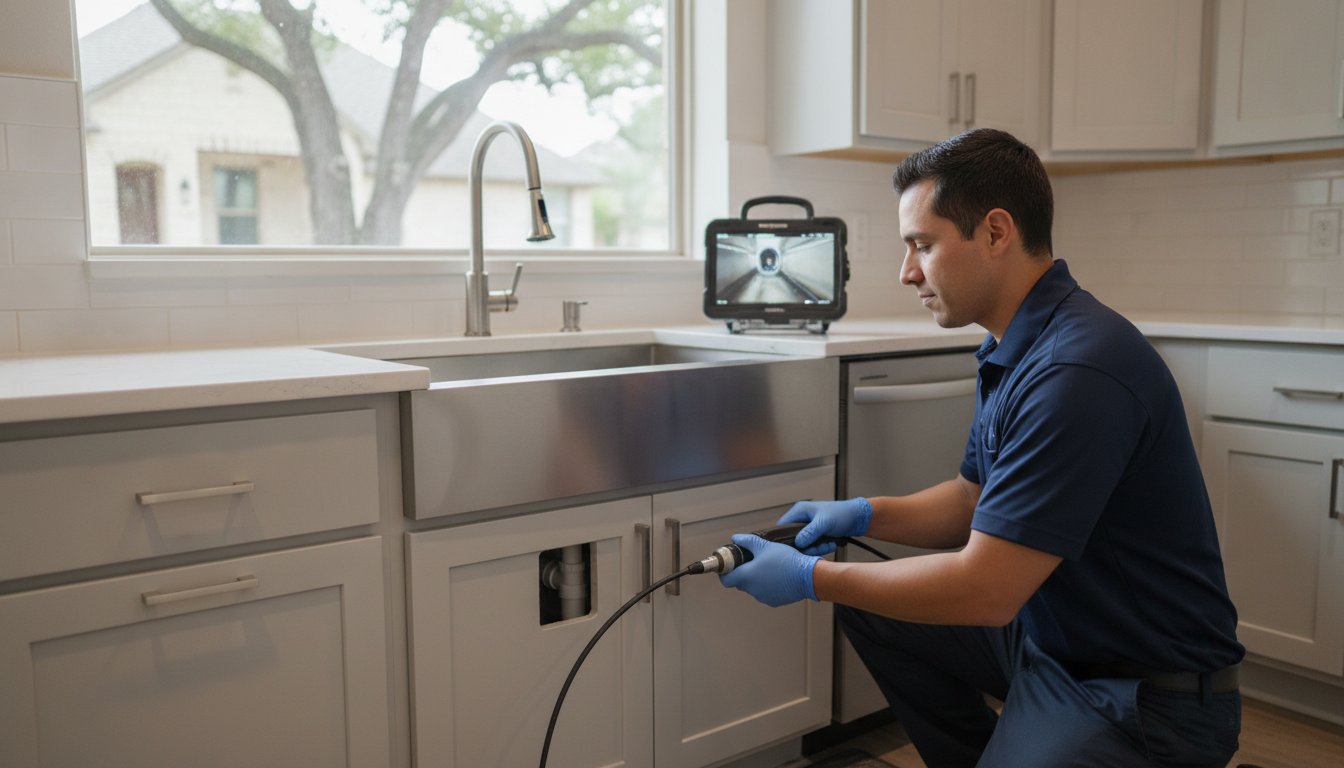
We take a Master Craftsman approach to these complex issues by seeing the problem before we ever pick up a shovel. Using high-definition camera technology, we can travel through your entire plumbing system to identify the exact location of a root intrusion or a collapsed section. This saves homeowners thousands of dollars by preventing unnecessary digging and ensuring we only repair what is actually broken. Video proof eliminates guesswork in sewer repair by providing a clear, visual map of the pipe’s interior and the precise nature of the obstruction.
If your drains are gurgling or multiple fixtures are backing up at once, you need a professional sewer repair assessment before a minor blockage turns into a major foundation emergency.
The Garrett’s Plumbing Way: Integrity in Every Pipe
Choosing a professional is not just about getting a sink to drain; it is about who you trust to enter your home and protect your property. Garrett’s Plumbing represents four generations of trade professionals who have dedicated their lives to the craft. We have spent over 27 years learning the specific quirks of Central Texas soil and water conditions. When you need a plumber clogged drain expert, you deserve a technician who values craftsmanship over a quick transaction. We combine old-school reliability with the latest diagnostic tools, ensuring you get the precision of fiber-optic cameras and the power of hydro-jetting backed by decades of hands-on experience.
Our pricing reflects this deep commitment to honesty and transparency. You will not find gimmicks or "too good to be true" offers that hide the real cost of labor or materials. We provide clear, straightforward estimates for our neighbors in Austin, Round Rock, and Pflugerville. We believe that doing a job the right way the first time is the only way to build a lasting relationship with our community. By focusing on the root cause of your drainage issues, we help you avoid the thousands of dollars in secondary damage caused by neglected leaks or improper DIY fixes.
Why a Family-Owned Pro Matters
There is a unique level of accountability when your family name is painted on the side of the truck. We are not a faceless corporation; we are your neighbors who take personal pride in every pipe we repair. Our 27+ years of local experience means we understand how Austin's shifting clay affects the plumbing in your specific neighborhood. We operate as ethical guides for our clients. We provide the necessary repairs to keep your home safe and functional, and we never recommend services that you do not truly need. This steady, reliable presence is the foundation of the trust we have built across Central Texas.
Ready to Clear the Clog for Good?
A professional drain cleaning austin service is an investment in the longevity and safety of your home. It moves you past the constant anxiety of recurring backups and protects your foundation from the hidden dangers of sewer line failures. If you are ready for a permanent solution that restores your pipes to their original flow capacity, scheduling a priority service call is the first step toward total peace of mind. We treat every home with the respect it deserves, ensuring your plumbing remains a silent, reliable part of your family’s comfort for years to come.
Invest in Your Austin Home’s Long-Term Health
A clogged drain is more than just a nuisance; it is a signal from your home's infrastructure that deserves professional attention. We've explored how chemical cleaners can warp modern pipes and why "flushable" wipes are often the hidden culprit behind major sewer backups. By choosing a methodical approach over a quick DIY fix, you protect your foundation from the risks of slab leaks and ensure your plumbing functions as it should for decades to come.
Schedule Your Professional Drain Cleaning with Garrett's Plumbing Today!
Frequently Asked Questions
Is it okay to use a plunger on every type of clogged drain?
Plunging is safe for most minor sink and toilet clogs, but you should avoid it if you've already poured chemical cleaners down the drain. The pressure from a plunger can splash caustic liquids back onto your skin or eyes. If a few firm plunges don't clear the blockage, the issue is likely deeper in the system. Continuing to plunge can put unnecessary stress on old, weakened pipe joints.
How often should I have my home's drains professionally cleaned?
Why does my drain keep clogging even after I use a chemical cleaner?
Chemical cleaners usually only burn a tiny hole through the center of a blockage rather than removing it entirely. This leaves behind a sticky, jagged residue that quickly catches hair and soap scum, leading to a new clog. Chemicals also can't address structural issues like a pipe belly or a broken line caused by Austin's shifting clay soil, which requires a more permanent mechanical fix.
Can tree roots really grow into my sewer pipes in Austin?
Tree roots are a major problem in Central Texas, particularly during our long summer droughts. As surface soil dries out, roots seek the consistent moisture found inside your sewer pipes. They can enter through tiny hairline cracks or loose joints. Once inside, they grow rapidly into a dense net that traps all solid waste, eventually leading to a complete system failure that requires professional intervention.
What is the most common cause of a main sewer line backup?
The most frequent cause of a main line backup is a combination of "flushable" wipes and grease accumulation. These items don't break down; instead, they bind with the minerals in our hard water to form rock-hard obstructions. Over time, these masses restrict water flow until the entire line is blocked. Regular maintenance from a plumber clogged drain specialist can identify these accumulations before they cause an emergency.
Are 'flushable' wipes really safe for my septic or sewer system?
No, these wipes are not safe for any plumbing system regardless of what the packaging claims. While they might clear your toilet bowl, they don't disintegrate like standard toilet paper. They often get snagged on pipe walls or tree roots, leading to massive blockages in your lateral line. In septic systems, they fail to break down in the tank, which can lead to expensive pumping needs.
How do I know if my clog is a plumbing emergency?
You are facing a plumbing emergency if sewage is backing up into your tubs or if multiple fixtures are clogged at the same time. These are clear signs that your main sewer line is blocked. If you smell foul odors or hear gurgling sounds from your drains while running the dishwasher or laundry, stop using water immediately to prevent a messy overflow inside your home.
What should I do if my sink is backed up and won't drain at all?
If your sink is completely backed up, the first step is to stop running any water in that area. Do not use over-the-counter chemical cleaners, as they can damage your pipes and make the eventual repair more hazardous for your technician. Try a standard plunger first. If that fails, it is time to call a professional who can use a camera to locate the specific source of the blockage safely.

Comments