Garbage Disposal Repair in Austin: A Homeowner’s Troubleshooting & Repair Guide

You’ve just finished a family dinner, but as you flip the switch, your kitchen sink responds with a dull, metallic hum instead of its usual roar. It’s a common Austin headache that often brings a sense of dread about electrical shocks or the high cost of a total replacement. If you’re staring down a clogged drain or a stubborn motor, you aren’t alone. Many homeowners find that professional garbage disposal repair in Austin is the key to restoring order without the stress of a DIY disaster.
We understand that a broken disposal is more than just a nuisance; it’s a disruption to your home’s rhythm and a threat to your plumbing’s health. Austin’s water is classified as moderately hard, averaging about 102.33 parts per million of minerals. Over time, these minerals can build up on internal seals and blades, leading to premature wear and unexpected clogs. This guide will help you identify common failures, perform safe resets, and recognize when it's time to bring in a seasoned expert to protect your kitchen. You'll learn how to keep your unit quiet and functional while avoiding the unnecessary expense of a full system swap.
Table of Contents
Common Signs Your Austin Garbage Disposal Needs Repair
Recognizing the early warning signs of a failing appliance can save you from a major kitchen disruption. A garbage disposal unit is a reliable workhorse, but it isn't invincible. When it starts to struggle, it usually sends out clear signals that it needs professional attention. Understanding these symptoms is the first step toward deciding if you need garbage disposal repair in Austin or if a simple home reset will solve the problem.
One of the most frequent complaints we hear from homeowners involves a distinct, dull humming sound. This happens when the motor is receiving electrical power but the internal blades are unable to rotate. On the other hand, if your sink is backing up or draining at a snail's pace, you might be facing a drain cleaning issue rather than a mechanical failure. It's vital to distinguish between a clog inside the disposal's grinding chamber and a blockage further down the plumbing line. If the disposal is clear but the water stays put, the problem likely sits in the P-trap or the main drain pipe.
Water pooling under the sink is another red flag that demands a quick response. This often stems from a loose mounting assembly or a cracked housing unit. While a loose seal is a straightforward fix, a crack in the unit’s plastic body usually signals the end of its functional life. Additionally, if your kitchen smells like decaying waste despite constant rinsing, food is likely trapped in the unit's crevices or on the underside of the splash guard. These persistent odors are a sign that the grinding components aren't pulverizing waste as efficiently as they once did.
The Humming vs. Silent Disposal
A garbage disposal jam is a mechanical obstruction of the impeller blades. When this occurs, you'll hear that familiar hum as the motor strains against a stuck object, like a fruit pit or a stray piece of silverware. Most modern units feature an internal circuit breaker designed to protect the equipment. This safety feature cuts power automatically before the motor burns out from the heat of the jam. If your unit is completely silent and won't respond to the switch, it's likely that this breaker has tripped or the motor has reached a state of total electrical failure. Professional garbage disposal repair in Austin can often reset these systems or clear the jam before permanent damage occurs.
Visual and Olfactory Warning Signs
Take a moment to look under your sink with a flashlight while the unit is running. Constant vibrations from daily use can cause the mounting ring to loosen over time. If the unit wobbles during operation, it will eventually break the seal at the sink flange, leading to leaks that can rot your kitchen cabinetry. Beyond visual leaks, pay attention to "rotten egg" smells. These odors often point to old food trapped in the rubber splash guard or the upper grinding chamber. Regular cleaning helps, but if the smell lingers, it usually means the internal components are coated in a layer of organic buildup that requires a deeper mechanical cleaning or part replacement.
The Impact of Austin’s Hard Water on Disposal Lifespan
Austin residents take pride in our local landscape, but the same limestone that makes the Hill Country beautiful also impacts our plumbing. The Hardness of Water in our region is a direct result of the Edwards Aquifer. With an average hardness of 102.33 parts per million, Austin's water is classified as moderately hard. While this is safe to drink, the calcium and magnesium leave behind a stubborn white crust known as scale. This scale doesn't just sit on your showerhead; it migrates into the heart of your kitchen appliances.
When this mineral-rich water evaporates inside your disposal, it leaves behind rock-hard deposits. Over time, these deposits coat the grinding ring and the impeller blades. This buildup increases friction, forcing the motor to work harder to achieve the same results. If left unchecked, the scale can eventually bridge the gap between moving parts, leading to a seized motor that requires professional garbage disposal repair in Austin. It's a common issue that we see in homes across the city, where mechanical parts simply can't fight through the mineral crust.
Mineral Scaling and Component Friction
Chemical Reactions and Seal Integrity
Hard water minerals don't just stay on the surface; they interact with food acids to accelerate corrosion on metal components. This is why professional-grade units, often built with stainless steel grinding chambers, tend to outlast the cheaper retail models found in big-box stores. Mineral buildup acts like "sandpaper" on the disposal’s internal seals. As these seals degrade, they become brittle and lose their ability to keep water away from the motor. If you notice dampness under the sink, it's a sign the hard water has finally compromised the unit's integrity. Our team at Garrett’s Plumbing can help you assess if a repair is enough or if a more resilient model is needed to handle our local water chemistry.
To fight back against scale, you can descale your unit naturally. Pouring a cup of vinegar and half a cup of baking soda down the drain and letting it sit for fifteen minutes can help dissolve minor mineral deposits. Following this with a flush of cold water and ice cubes helps keep the blades clear. If these home remedies don't restore the unit's performance, it may be time to schedule a professional garbage disposal repair in Austin to ensure the motor hasn't been permanently damaged by friction.
Repair vs. Replacement: When to Call an Austin Plumber
Deciding whether to salvage an old unit or invest in a new one is a choice every homeowner eventually faces. At Garrett’s Plumbing, we approach this decision with a "Master Craftsman" philosophy. We believe in fixing things the right way, which means we won't push for a replacement if a reliable repair can extend the life of your equipment. However, there is a point where the cost of garbage disposal repair in Austin outweighs the long-term value of the appliance. Generally, if a unit is over ten years old and requires a major internal component, a replacement is the more ethical and economical recommendation.
One of the most telling signs of motor health is the behavior of the red reset button located at the bottom of the unit. This button acts as a dedicated circuit breaker. If the button pops out and refuses to stay engaged after you press it, the internal motor windings are likely shorted or burned out. Additionally, you should inspect the outer housing for any hairline fractures. A cracked shell is a critical failure that cannot be safely patched. Because the housing holds the weight of the motor and the vibration of the blades, a crack will eventually lead to a catastrophic leak that can ruin your kitchen cabinetry.
Signs a Repair is the Right Choice
Many common issues are surprisingly simple to resolve. If your unit is leaking from the top, it often means the plumber's putty at the sink flange has dried out or the mounting bolts have vibrated loose. These are straightforward, cost-effective fixes that don't require a new unit. If you're unsure where the water is coming from, professional leak detection services can pinpoint whether the moisture is a disposal failure or a separate sink seal issue. Preserving a high-quality, professional-grade unit is almost always better than settling for a cheap retail model that won't stand up to the mineral levels documented in the Austin Water Quality Report.
When Replacement is the Only Option
Internal corrosion is the primary enemy of local disposals. If you see rust colored water dripping from the very bottom of the motor housing, the internal seals have failed, allowing water to eat through the metal. A persistent hum that continues even after you've cleared a jam with a hex wrench is another sign of a "seized" motor that has suffered permanent electrical damage. In these cases, upgrading to a higher-torque model with at least 3/4 horsepower is a wise move. A more powerful motor handles fibrous Austin produce more effectively, which helps you avoid frequent emergency plumbing calls caused by stubborn clogs in the grinding chamber. Choosing the right equipment today prevents the disruption of a broken kitchen tomorrow.
Safe DIY Troubleshooting Steps for Homeowners
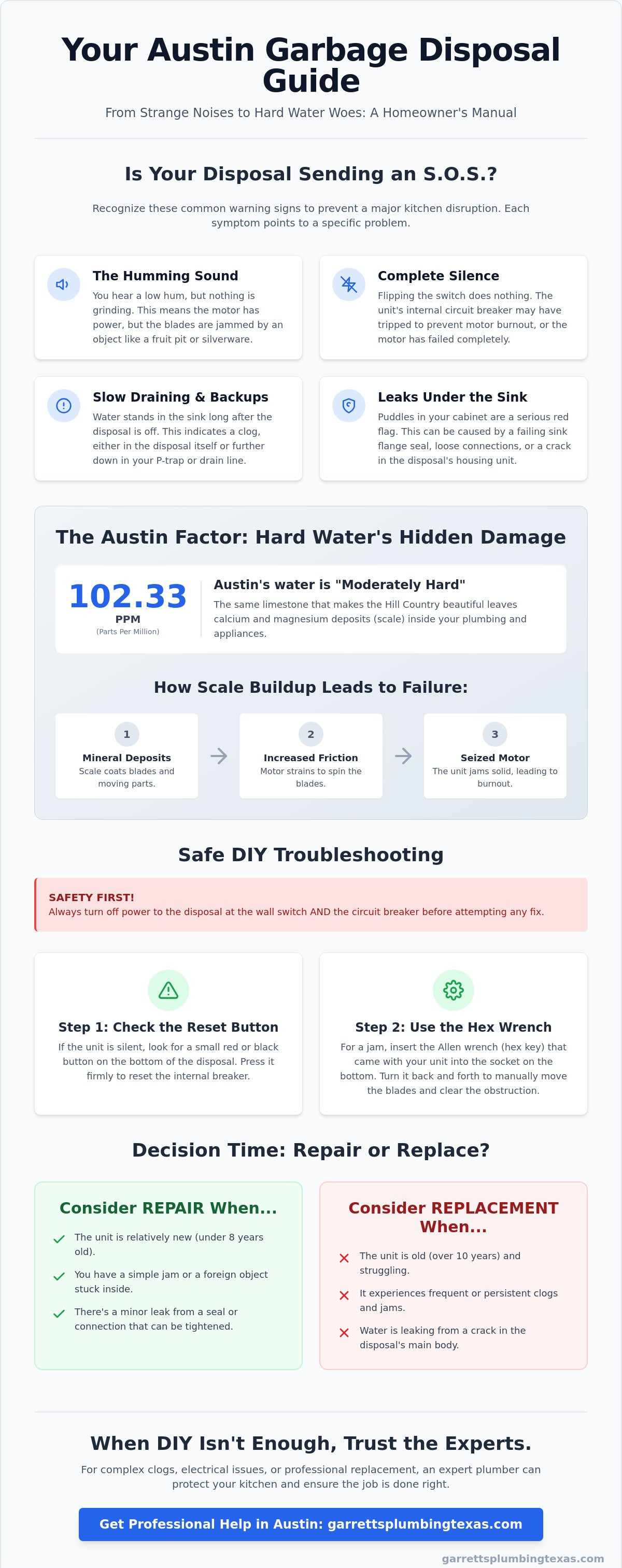
Many common disposal issues can be resolved with a few simple tools and a steady hand. However, safety must be your absolute priority. Before you even look under the sink, ensure the unit cannot turn on. Unplug the disposal from the wall outlet or flip the dedicated switch in your electrical panel. Never place your hand inside the grinding chamber, even if you are certain the power is off. Using long-handled tongs or pliers to remove debris is the only way to protect your fingers from the sharp impeller blades. If these basic steps don't restore function, it may be time to seek professional garbage disposal repair in Austin to avoid permanently damaging the motor.
How to Manually Unjam the Impeller
Most modern units feature a small, hexagonal hole at the very bottom center of the motor housing. This is a manual override for the grinding plates. You'll need a 1/4 inch hex wrench, often called an Allen key, to engage this socket. Insert the wrench and firmly rotate it back and forth. This motion helps break the mineral "seal" or dislodge whatever object is wedged between the blades and the grinding ring. If the wrench won't budge even with moderate pressure, the jam is likely catastrophic and requires a professional teardown. Once the blades spin freely, use your pliers to remove the obstruction from the top before restoring power.
Testing the Electrical Connection
If your disposal is silent and won't respond after unjamming, the problem is likely electrical. Start by checking the GFCI outlet under your sink; if the tiny button has popped out, press it back in. Next, locate the red button on the bottom of the disposal unit itself. The red reset button is a safety feature that trips to prevent motor fires. If it has popped out, wait five minutes for the motor to cool down before pushing it back in. Finally, check your home's main breaker panel to ensure the circuit hasn't tripped. To test-fire the unit, always run cold water first, then flip the switch for a few seconds. If you still hear a hum or see no movement, you can contact Garrett’s Plumbing to have a master craftsman evaluate the motor's health.
The Garrett’s Plumbing Approach to Kitchen Reliability
At Garrett’s Plumbing, we don’t just see a broken appliance; we see a neighbor in need of a reliable kitchen. Our family has served the Austin, Round Rock, and Pflugerville areas for four generations. This heritage of trade knowledge allows us to approach every garbage disposal repair in Austin with a level of precision that corporate franchises simply can't match. We take pride in being guardians of quality, ensuring that every task is treated with personal care and technical excellence.
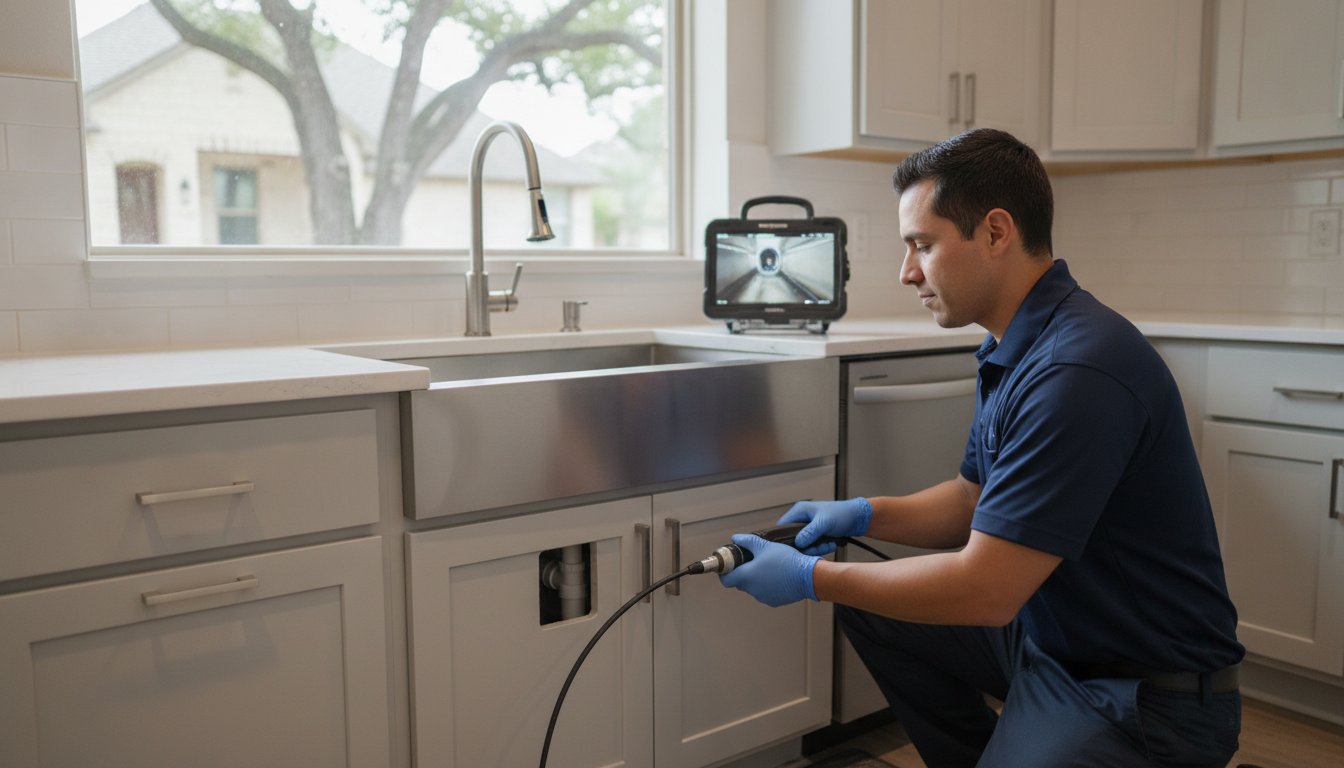
While we value traditional craftsmanship, we also utilize modern proficiency to solve complex problems. For homes dealing with persistent clogs, we offer high-torque motor installations that handle organic waste more effectively. Sometimes, a disposal failure is a symptom of a deeper issue. In those cases, we provide comprehensive sewer system inspections to ensure your home’s foundation and health are secure. You’ll always receive transparent pricing and the steady, reassuring presence of a seasoned expert.
Why Austin Families Trust Garrett’s
With over 27 years of hands-on experience, our team has seen every possible plumbing scenario in the Central Texas region. We understand the nuances of local infrastructure and the specific impact of our environment on your pipes. Our "old-school" reliability means we show up on time and treat your home with the respect it deserves. We don't use high-pressure tactics. Instead, we act as an ethical guide, helping you make the best decision for your family’s budget and comfort. We treat your home’s plumbing as if it were our own, ensuring every connection is secure and every motor runs quiet.
Schedule Your Professional Kitchen Service
Whether you’re facing a sudden motor failure or looking to upgrade to a more resilient system, we're here to help. Our service area extends beyond the city limits to include San Marcos, New Braunfels, and the surrounding Central Texas communities. We’re ready to bring a functional, quiet disposal back to your kitchen so you can get back to your daily routine without the stress of a broken sink. Contact Garrett’s Plumbing for expert garbage disposal repair today.
Restore Your Kitchen’s Efficiency and Peace of Mind
Managing a busy kitchen becomes much easier when you understand the mechanics under your sink. From recognizing the abrasive effects of Central Texas mineral scale to knowing when a motor has reached the end of its functional life, you now have the knowledge to protect your home. While safe DIY steps like using a hex wrench or the reset button can resolve minor jams, persistent leaks and electrical failures deserve the attention of a professional to prevent water damage to your cabinetry.
When troubleshooting isn't enough, you can rely on a team that values heritage and technical precision. We bring over 27 years of industry experience and four generations of trade expertise to every service call. As licensed and insured master plumbers, we’re committed to providing the right solution for your specific needs rather than a high-pressure sales pitch. If you’re ready to stop the leaks and silence the hum, it’s time for expert garbage disposal repair in Austin.
Schedule Your Garbage Disposal Repair with Austin’s Trusted Family Plumbers and regain the reliability your kitchen deserves. We look forward to serving you with the same care and integrity we’ve provided our neighbors for decades.
Frequently Asked Questions
Why is my garbage disposal making a humming sound but not spinning?
A humming sound usually indicates that the motor is receiving power but the impeller blades are jammed by a foreign object. This could be a stray piece of bone, a fruit pit, or even a build-up of mineral scale common in local water. If the unit is left humming, it will overheat and trip the internal circuit breaker. You can often clear this by using a hex wrench to manually rotate the motor from the bottom.
Can I use liquid drain cleaner in my garbage disposal?
You should never use liquid drain cleaners in your garbage disposal. These harsh chemicals can corrode the internal metal components and degrade the rubber seals over time. If the cleaner sits in the grinding chamber, it can splash back and cause chemical burns during a future garbage disposal repair in Austin. Instead, use natural solutions like baking soda and vinegar or ice cubes to safely clear minor debris and odors.
How do I know if my garbage disposal is leaking from the bottom?
A leak from the very bottom of the motor housing usually signals that the internal seals have failed. This allows water to bypass the grinding chamber and enter the electrical motor area. If you see water dripping from the reset button or the power cord entry point, the unit has likely suffered internal corrosion. In this situation, the unit is typically beyond a simple repair and requires a full replacement to prevent electrical hazards.
Is it worth repairing a garbage disposal or should I just replace it?
Repairing a disposal is often worth it if the issue involves a simple jam, a loose mounting assembly, or a worn splash guard. However, if the motor is seized or the housing is cracked, replacement is the more ethical and cost-effective choice. Units older than ten years are generally nearing the end of their functional lifespan. We always evaluate the unit's overall health to ensure we are fixing it the right way for the long term.
How do I reset my garbage disposal if it stops working?
To reset your disposal, first ensure the power switch is in the "off" position for safety. Locate the small red button on the bottom or side of the motor housing. This is a thermal overload protector that trips when the motor gets too hot or jams. Press the button firmly until it clicks and stays in. If it pops back out immediately, let the motor cool for ten minutes before trying again.
What items are most likely to cause a garbage disposal jam in Austin?
Fibrous vegetables like celery stalks, corn husks, and potato peels are the most common culprits for jams in Central Texas kitchens. These materials can wrap around the impeller blades and stall the motor. Additionally, the moderately hard water in our area contributes to mineral scale buildup. This crusty residue can create extra friction, making it easier for small food particles to get wedged in the grinding ring and cause a total jam.
How much horsepower does a typical Austin home kitchen disposal need?
Most Austin households find that a 1/2 to 3/4 horsepower motor is the ideal range for daily use. A 1/2 HP model is sufficient for light waste, but a 3/4 HP unit offers more torque to handle tougher food scraps and resist jams caused by mineral buildup. For larger families or those who cook frequently, upgrading to a 1 HP professional-grade model provides the longevity and power needed to keep the kitchen running smoothly.
Why does my garbage disposal smell like sewage?
A sewage smell often indicates that decaying food waste is trapped in the upper grinding chamber or on the underside of the rubber splash guard. If regular cleaning doesn't solve the issue, the smell might be sewer gas escaping through the drain. This can happen if the P-trap has dried out or if there's a venting problem in your plumbing. Professional garbage disposal repair in Austin can identify if the odor is a simple cleaning issue or a deeper plumbing failure.

Comments