Hard Water Plumbing Problems: A Central Texas Homeowner’s Guide

Updated: Jun 28
Did you know that water in Austin is significantly harder than the national average, frequently measuring around 7.2 grains per gallon? While that stubborn white crust on your showerhead is a nuisance, it is actually a warning sign of deeper hard water plumbing problems hiding inside your walls. Because Central Texas sits on a foundation of limestone, rainwater picks up heavy doses of calcium and magnesium as it filters through the Edwards Aquifer. These minerals eventually settle in your pipes, creating a structural threat that goes far beyond cosmetic spots on your glassware.
It's frustrating to deal with appliances that fail years before their time or water bills that climb despite your best efforts to conserve. We understand the value of a home that runs smoothly, and we believe in doing things the right way to protect your family's comfort. This guide will help you discover how hard water quietly damages your home's plumbing and explain the professional solutions available to protect your pipes and appliances for years to come. We will look at the specific impact of mineral buildup on your fixtures and how modern water softening techniques can preserve your home for the next generation.
Table of Contents
What is Hard Water and Why is it a Problem in Austin?
To understand why Central Texas homeowners face unique challenges, we have to look at the ground beneath our feet. What is Hard Water? At its simplest, it is water that contains high concentrations of dissolved minerals, specifically calcium and magnesium. In Austin, our water supply primarily originates from the Edwards Aquifer. This massive limestone formation acts like a giant mineral sponge. As rainwater percolates through the limestone, it dissolves these minerals and carries them into our taps. It's a natural process, but it carries heavy consequences for your home's infrastructure.
We measure this mineral content in Grains Per Gallon (GPG), which is the standard measurement representing the weight of minerals dissolved in a single gallon of water. Austin’s water typically tests at 7.2 GPG, which is significantly higher than the national average of 5.6 GPG. While lower levels are often considered a "nuisance" because of spots on your silverware, Austin's levels often cross into "destructive" territory. This is the point where hard water plumbing problems begin to compromise the integrity of your pipes and valves. It is no longer just a cleaning headache; it is a structural concern.
The Science of Scale Formation
Heat is the primary catalyst for mineral buildup. When you turn on your water heater, a chemical reaction occurs within the tank. The heat causes the dissolved minerals to precipitate, turning them into solid calcium carbonate. This is the same white, rock-hard material you might see inside a neglected tea kettle. In your home, this scale accumulates inside your pipes and on heating elements. Because our geological foundation is constant, this isn't a seasonal concern. It's a year-round reality for families in Austin, Round Rock, and Pflugerville that requires a methodical approach to maintenance.
Hard Water vs. Soft Water: The Basic Comparison
Truly soft water is rare in our specific Texas geography. Naturally soft water usually comes from surface sources that haven't spent time filtering through mineral-rich rock. To achieve soft water here, we rely on ion exchange. This process replaces mineral ions with sodium or potassium ions to prevent scale. Without this intervention, the minerals in our water interfere with soap solubility. You might notice it's harder to get a good lather in the shower or that your clothes feel stiff after washing. This lack of solubility is often the first sign that hard water plumbing problems are quietly affecting your daily comfort and your home's long-term health.
5 Warning Signs of Hard Water Damage in Your Home
Most homeowners first notice the white, chalky residue on their showerheads and faucets. This is the most obvious sign of hard water plumbing problems, but it's often just the surface of a larger issue. In Central Texas, where we deal with high mineral content, these visible spots act as a diagnostic tool for your entire system. If you see it on your fixtures, it is almost certainly happening inside your pipes and appliances as well.
There are five primary red flags that suggest your home is struggling with mineral saturation:
Visible Limescale: Crusty buildup on aerators, showerheads, and around the base of faucets.
Decreased Water Pressure: A gradual loss of flow that affects the whole house rather than just one fixture.
Frequent Pinhole Leaks: Small, localized leaks in copper lines caused by internal turbulence and mineral corrosion.
Water Heater Noises: Rumbling or popping sounds coming from the tank, often described as "kettling."
Persistent Spotting: White film on glassware and glass shower doors that resists standard household cleaners.
Addressing these signs early can save your appliances and prevent costly emergency repairs. If you've noticed crusty valves or rumbling heaters, our team can help with water softener repair and install to stop the damage at its source.
Detecting Scale in Hidden Places
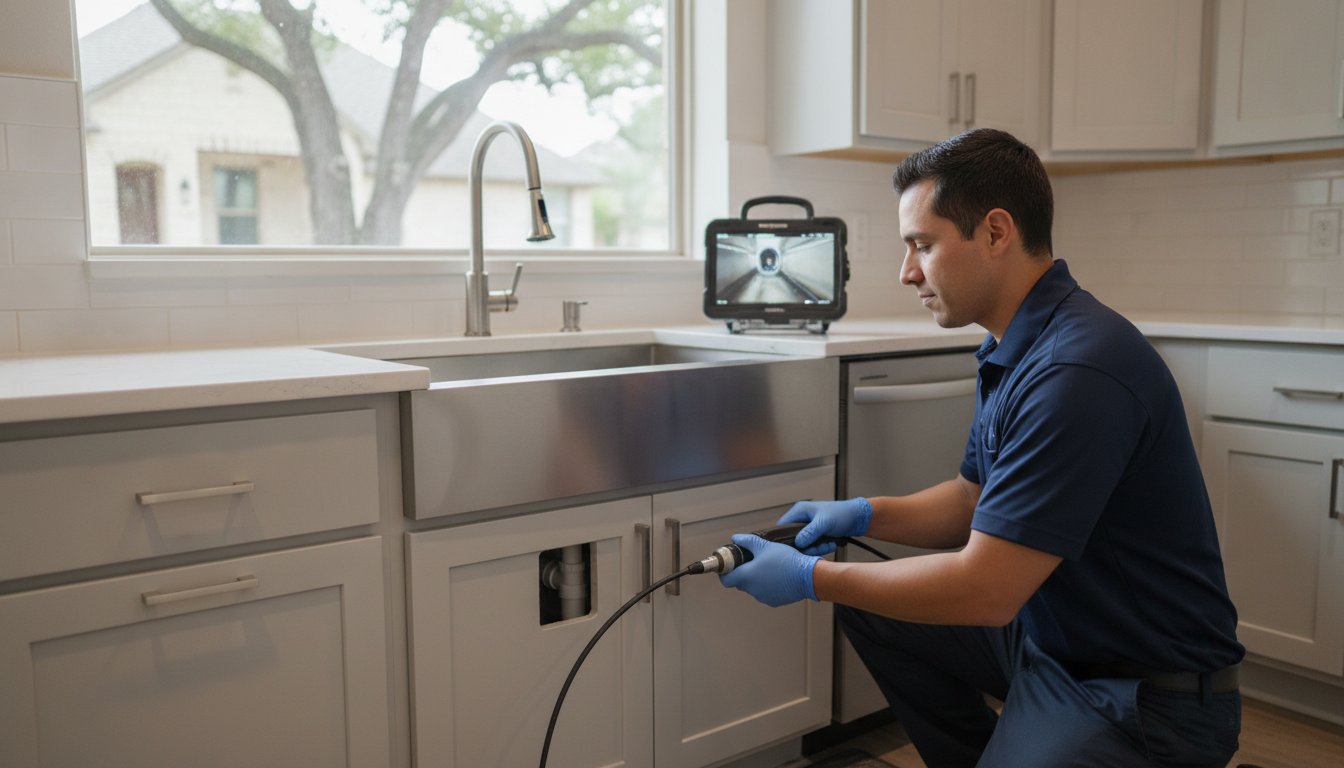
You don't have to tear out a wall to see if minerals are accumulating. One of the best places to check is your toilet tank. Lift the lid and look at the bottom. If you see a layer of white or tan "sand," that is mineral sediment that has precipitated out of your water. You should also inspect the shut-off valves behind your toilets and under sinks. If these valves appear "crusty" or are difficult to turn, scale has likely compromised the internal seal. This is a major red flag because these valves need to work perfectly during a plumbing emergency.
The Impact on Water Pressure
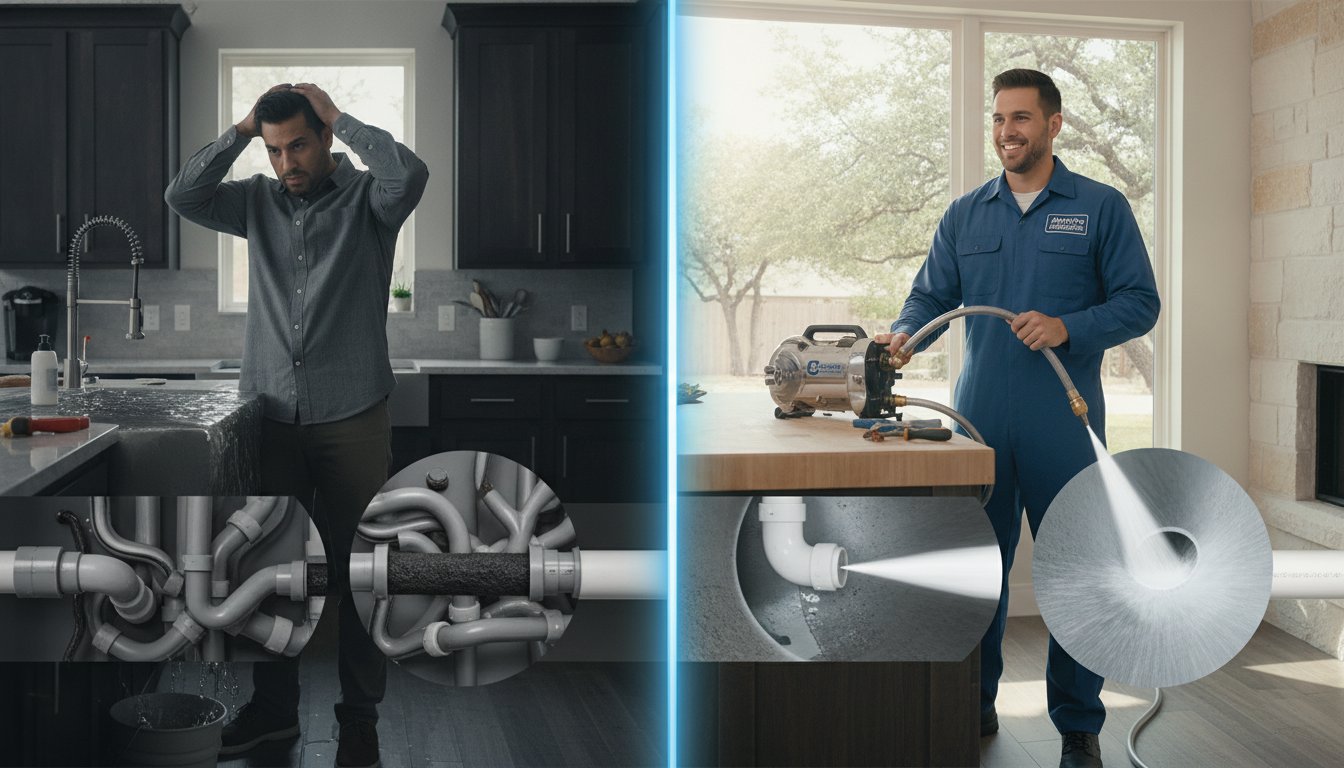
When minerals build up inside your pipes, they reduce the "inner diameter" of the plumbing. Think of it like a clogged artery. This restriction forces your water to travel through a smaller space, which significantly drops your usable pressure. Many people try to solve this by cleaning the faucet aerator. While this provides a temporary boost, it doesn't address the restriction living deeper in your lines. Hard water plumbing problems can even cause "ghost flushing" in toilets, where mineral deposits on the flush valve prevent a tight seal, causing the tank to refill intermittently throughout the day.
How Hard Water Destroys Your Pipes and Valves
There is a common misconception that modern plumbing materials have completely solved the issue of mineral buildup. Many people believe that switching to plastic piping makes their home immune to hard water plumbing problems. While it's true that smoother surfaces resist scale better than old galvanized steel, the reality is more complex. Minerals are patient. Over time, they find ways to compromise even the most advanced systems in our Central Texas homes.
The U.S. Geological Survey on water hardness notes that dissolved calcium and magnesium are common across the country, but our local concentration is high enough to create physical damage. Beyond just clogging the flow, mineral deposits act as an abrasive that wears down rubber seals and gaskets. This abrasive quality leads to slow drips and internal component failure long before the expected lifespan of the fixture is reached. It turns a simple faucet into a ticking clock of maintenance needs.
PEX vs. Copper: How Minerals Attack Different Materials
Copper has been the gold standard for decades, but it's particularly vulnerable to the chemistry of Austin's water. When scale forms inside a copper pipe, it doesn't always create a smooth layer. Instead, it creates a rough, uneven surface that disrupts the flow. This causes water turbulence. This constant swirling of water against the pipe wall leads to localized corrosion, which eventually results in the dreaded pinhole leak. On the other hand, PEX and PVC are often marketed as scale-proof. While they don't corrode, scale still attaches to the interior walls of these pipes. This reduces the inner diameter and restricts flow. Your home's skeleton plumbing might stay intact, but its ability to deliver water efficiently will steadily decline over several years.
Emergency Shut-off and Fixture Failure
The most dangerous aspect of mineral buildup is what we call the silent killer of valves. Your emergency shut-offs, pressure regulators, and faucet cartridges all rely on moving parts with tight tolerances. When minerals settle into these mechanisms, they can seize the valve entirely. This is a disaster during a burst pipe emergency when you need to kill the water supply quickly. We often see high-end shower valves and cartridge-style faucets fail because the internal parts are literally locked in place by stone. If your drains are also slow, professional drain cleaning in Austin might be needed to clear secondary mineral clogs that have migrated into your waste lines and restricted the exit flow.

The Hidden Cost: Appliances and Efficiency Losses
While damaged pipes are a major structural concern, the most immediate financial impact of hard water plumbing problems often appears on your monthly utility bills. Your appliances are the workhorses of your home. When minerals from our local water supply enter these machines, they don't just pass through. They settle. This accumulation creates a physical barrier that forces your equipment to work harder, consume more energy, and ultimately fail years before its time.
In a traditional tank-style water heater, minerals settle at the bottom of the unit. This creates a thick, stony layer of insulation between the heating element and the water. Your heater has to burn more fuel to penetrate that rock before it can even begin to warm the water. For tankless units, the situation is even more critical. These systems use narrow heat exchanger passages that can clog completely without annual descaling. In Austin, skipping this specialized maintenance is a recipe for total system failure and an expensive replacement that could have been avoided.
If your unit is making noise or struggling to keep up with your family's needs, it is time for professional water heater repair and install services to restore your home's efficiency and protect your investment.
Sediment Buildup in Water Heaters
Have you ever heard a strange popping or rumbling sound from your garage or utility closet? This is often called "kettling." It happens when steam bubbles get trapped under the mineral sediment at the bottom of your tank. When they finally burst through the scale, they create that distinct, unsettling noise. Beyond the noise, this buildup can actually void your manufacturer's warranty. Many brands now require proof of regular maintenance, such as annual flushing, to cover part failures. Without it, you might be left footing the bill for a problem that was entirely preventable.
Efficiency and Utility Bill Impact
The efficiency loss is staggering. Industry research suggests that even a small amount of scale buildup can increase energy consumption by 10 to 25 percent. You are essentially paying to heat a layer of rock. Hard water plumbing problems also force you to use significantly more detergent and cleaning chemicals. Because the minerals prevent soap from lathering properly, you end up using more product to achieve the same level of cleanliness. This creates a cycle of higher spending and a larger environmental footprint. When appliances like dishwashers and high-efficiency washing machines are forced to run with mineral-heavy water, their internal pumps and valves wear out much faster, leading to premature trips to the landfill.
Professional Solutions: Protecting Your Austin Home
Solving hard water plumbing problems in Central Texas requires more than just a trip to a big-box retail store. While those "one-size-fits-all" systems are readily available, they often lack the capacity to handle the specific mineral density of the Edwards Aquifer. A generic unit might work for a few months, but it often fails to regenerate properly or can't keep up with the actual demand of a busy family. We approach water treatment with a master craftsman's eye for detail, ensuring that the solution matches the unique chemistry of your neighborhood.
The Garrett's Plumbing approach is built on a foundation of multi-generational expertise. We don't just guess at what you need. We size every system based on verified grains of hardness and your specific household flow rate. This methodical process is "the right way" to protect your home. It ensures your equipment runs efficiently without wasting water or salt. Whether you choose traditional ion exchange or a modern salt-free descaler, our goal is to provide a steady, reliable shield for your pipes and fixtures.
Choosing the Right Water Softener
Selecting the correct unit involves balancing several technical factors to ensure long-term reliability. We look at three primary criteria:
Grains Per Gallon (GPG): Accurate testing determines the exact mineral load your system must process.
Flow Rate: Your system must deliver enough water for showers, laundry, and dishes to run simultaneously without a drop in pressure.
Regeneration Cycles: Efficient systems only clean themselves when necessary, saving you money on salt and water.
Professional installation also guarantees that your drainage and overflow lines are fully code-compliant. This protects your home from potential floods during a system malfunction. You should also distinguish between softening and filtration. While a softener removes minerals, a whole-home filtration system targets chlorine and other contaminants. Combining these creates the highest standard of water quality for your family.
Long-term Maintenance and Peace of Mind
A high-quality water softener eventually pays for itself through the extended longevity of your plumbing and appliances. By removing the minerals that cause hard water plumbing problems, you stop the silent erosion of your home's value. We also recommend annual plumbing inspections to catch any legacy scale damage before it leads to a leak. This proactive care offers the stability and reassurance every homeowner deserves. Ready to protect your home? Schedule a water softener consultation with our family-owned team today.
Take Control of Your Home’s Plumbing Health
At Garrett’s Plumbing, we bring four generations of plumbing expertise to every home we visit. For over 27 years, we have served the Central Texas community with the integrity and precision of master craftsmen. As licensed and insured Austin plumbers, we believe in doing things the right way to ensure your home remains a stable, efficient haven for your family. Protect your home from hard water damage-Contact Garrett's Plumbing today! We look forward to helping you secure your home's future with the care and reliability you deserve.
Frequently Asked Questions
Is Austin water considered hard?
Yes, Austin's water is officially classified as hard to very hard. It typically measures around 7.2 grains per gallon, which is well above the national average. This high mineral content comes from the limestone in the Edwards Aquifer. While it's safe to drink, it is the primary cause of hard water plumbing problems throughout Central Texas homes and businesses.
Can hard water cause my pipes to burst?
Hard water rarely causes a sudden, explosive burst, but it significantly weakens your pipes over time. In copper systems, mineral buildup creates turbulence that leads to localized corrosion and pinhole leaks. These small leaks can cause massive water damage if they occur behind a wall. The restriction also puts unnecessary stress on your joints and valves, making the entire system less reliable during pressure spikes.
Do I really need a water softener if I have plastic PEX pipes?
Yes, you still need protection even with modern PEX piping. While PEX doesn't corrode like metal, minerals still attach to the interior walls and reduce your water flow over several years. More importantly, your PEX lines lead to metal fixtures, valves, and appliances. A softener protects these sensitive components from seizing up or failing prematurely due to the stone-like mineral deposits that accumulate at every connection point.
How much does a whole-home water softener cost to install?
The cost for a professional installation depends on the size of your home and your specific water hardness levels. Factors such as the grains of hardness, your family's daily water usage, and the existing plumbing configuration all play a role in the final investment. We focus on sizing a system correctly the first time to ensure you get the best long-term value and protection for your home's infrastructure.
Can I fix hard water plumbing problems myself with vinegar?
Vinegar is an excellent tool for cleaning surface scale from showerheads and faucets, but it cannot fix internal hard water plumbing problems. It is simply not practical or safe to flush your entire plumbing system with vinegar. While it's a great neighborly tip for your coffee maker or a crusty aerator, it won't clear the thick layers of rock already sitting inside your main lines or water heater tank.
What happens if I ignore the limescale buildup on my water heater?
If you ignore the buildup, your water heater will lose efficiency and eventually fail. The minerals create an insulating layer that forces the unit to run longer and hotter to reach the desired temperature. This extra heat stresses the tank material and can lead to cracks or leaks. You'll also likely hear loud popping or rumbling sounds as steam bubbles struggle to escape through the sediment at the bottom.
How long does a water softener typically last?
A well-maintained, high-quality water softener typically lasts between 10 and 15 years. The lifespan depends heavily on the mineral load it processes and how often the resin bed is cleaned. Choosing a system that is properly sized for your home's specific grains of hardness is the best way to ensure it reaches its full potential and provides a decade or more of reliable, worry-free service.
Will a water softener improve my home's water pressure?
A water softener maintains your current pressure by preventing new scale from narrowing your pipes. It doesn't act as a pressure booster. If your pipes are already heavily restricted by years of mineral buildup, a softener will stop the damage from getting worse, but it won't remove the existing rock. In those cases, you may need professional pipe cleaning or replacement to restore the full flow your home once had.

Comments