Is Your Austin Water Hard? 7-Point Water Softener Service Checklist

With mineral levels frequently reaching 20 grains per gallon, Austin water is officially classified as "extremely hard." You've likely seen the evidence in the form of white, chalky buildup on your expensive fixtures or felt it in laundry that never seems quite soft enough. It's a common headache for Central Texas homeowners; however, it doesn't have to be your reality. We believe in doing things the right way, using four generations of plumbing knowledge to keep your home running smoothly.
If you've already invested in a professional water softener installation Austin families trust, you know it's the primary defense for your plumbing infrastructure. Even the most reliable systems require a watchful eye to prevent premature appliance failure and mineral scale. This guide walks you through a 7-point service checklist to help you spot trouble before it leads to a leak. You'll discover how to decode complex valve settings and ensure your system provides the spot-free dishes and peace of mind your family deserves.
Table of Contents
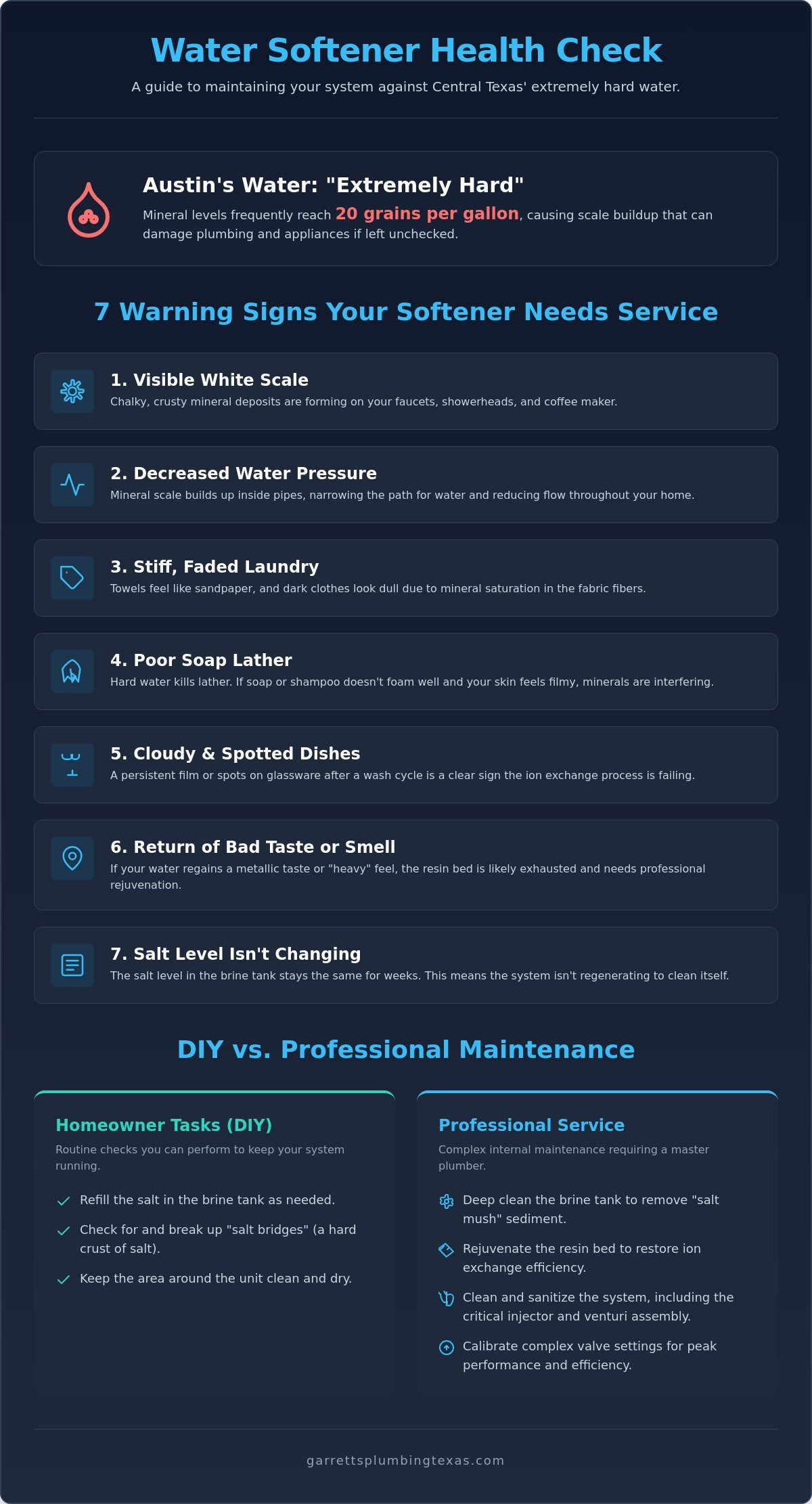
7 Warning Signs Your Home Needs a Water Softener Service
Living in Central Texas means dealing with some of the most mineral-heavy water in the country. To truly understand the problem, it helps to look at what hard water is and how it interacts with your home. When calcium and magnesium ions are present in high concentrations, they don't just stay dissolved; they settle on every surface they touch. If you've already invested in a professional water softener installation Austin families rely on, your system should be catching these minerals. However, even the best units can falter under the constant strain of our local limestone.
You shouldn't wait for a total system failure to call for a checkup. Often, your home will tell you exactly when the softening process is breaking down. Look for these common red flags:
Visible White Scale: If your faucets and showerheads look like they're growing white, "crusty" armor, your softener isn't doing its job.
The Soap Struggle: Hard water kills lather. If your shampoo feels thin or your skin feels like it has a sticky film after a shower, the minerals are winning.
The Salt Level Test: This is a simple mechanical check. If you notice your salt tank stays at the same level for weeks despite heavy water use, the system isn't regenerating.
The Visual Inspection Checklist
Performance and Water Quality Shifts
A failing softener affects more than just your skin. You might notice a gradual drop in water pressure. This happens because mineral scale builds up inside your pipes, effectively narrowing the path for water to flow. You may also notice a return of that metallic smell or "heavy" taste in your drinking water. This often occurs because the resin beads inside the tank have become fouled or exhausted. During peak usage times, "hardness grains" simply bypass the failing resin bed because the beads can no longer hold onto the incoming minerals. When this happens, you're essentially back to using raw, untreated Austin water. Professional maintenance ensures your water softener installation Austin system is properly calibrated to handle these peak demands without letting minerals slip through.
What Does a Professional Water Softener Service Include?
A professional service call is much more than a quick glance at your salt levels. It is a methodical restoration of your system's efficiency. While many homeowners handle basic salt refills, the internal mechanics of a water softener require a seasoned eye to maintain peak performance. Our approach is grounded in the belief that a system should last for decades, not just a few years. This longevity depends on precision care that goes deeper than the surface.
The process begins with a comprehensive cleaning of the brine tank. Over time, salt doesn't just dissolve; it can break down into a thick, muddy substance known as "salt mush" at the bottom of your tank. This sediment interferes with the brine concentration, which eventually prevents your system from regenerating properly. We also focus on resin bed rejuvenation. This involves using specialized cleaners to strip away iron and mineral deposits that standard salt cycles cannot remove. This step is vital for restoring the ion exchange capacity that makes a water softener installation Austin residents rely on so effective.
Deep Cleaning and Sanitization
Our team goes beyond the surface to ensure longevity. We thoroughly remove years of accumulated sediment and sanitize the entire system to prevent bacterial growth within the resin beads. A critical part of this service involves cleaning the injector and venturi assembly. These small components are responsible for creating the suction that draws brine into the resin tank. If they are clogged with even a tiny amount of debris, the entire softening process grinds to a halt. This level of detail is what separates a master plumber from a general technician.
Mechanical and Software Calibration
The control head is the brain of your system. We inspect every internal seal and valve to catch hidden leaks before they lead to water damage or high utility bills. We also perform a software audit. By reviewing the latest Austin's water quality reports, we can adjust your system's hardness settings to match current local conditions. This ensures your unit is not regenerating too often. Over-regeneration wastes salt and puts unnecessary wear on the mechanical parts. We test the control valve for proper cycle progression and bypass functionality, giving you the assurance that your system is operating exactly as intended. This methodical approach reflects our four generations of trade experience and our commitment to doing things the right way.
Why Central Texas Hard Water Demands Regular Maintenance
Central Texas is famous for its rugged beauty, but that same geology presents a constant challenge for your home's plumbing. The Edwards Aquifer, our primary water source, is essentially a massive limestone formation. As rainwater filters through this rock, it dissolves minerals, specifically calcium and magnesium. By the time that water reaches your tap, it's heavily saturated. According to U.S. Geological Survey guidelines, water is considered "very hard" once it crosses the 10.5 grains per gallon (GPG) threshold. In Austin, we regularly see levels between 12 and 20 GPG.
This high mineral content is why a water softener installation Austin homeowners choose is a necessity rather than a luxury. These minerals don't just stay in suspension. They eventually settle, leading to hard water plumbing problems that can be incredibly expensive to fix. One of the most critical synergies in home maintenance is how soft water protects your water heater installation Austin. Without a functioning softener, calcium creates a rock-hard layer of sediment at the bottom of your heater. This forces the unit to run longer and hotter to reach the desired temperature, which eventually cracks the tank lining.
The Impact on Austin Plumbing Infrastructure
Calcium deposits are methodical. Over the years, they attach to the inner walls of your copper and PEX pipes, slowly narrowing the diameter of your plumbing lines. This restriction reduces water pressure and forces your entire system to operate under higher stress. Modern, high-efficiency appliances like dishwashers and washing machines are built with precision parts. A single flake of dislodged mineral scale can clog an internal solenoid valve, leading to a costly repair or a total appliance replacement long before its expected lifespan.
Seasonal Changes in Water Hardness
Environmental factors in Round Rock and Pflugerville play a significant role in water quality. During drought conditions, mineral concentrations often spike as the water table drops. This means the settings programmed into your softener during a wet spring might not be enough to handle the "heavier" water of a dry Texas summer. We've seen many systems fail simply because they weren't adjusted for these shifts. As a rule of thumb from our four generations of experience, you should test your water hardness every six months. This simple check ensures your system stays efficient and your plumbing remains protected year-round.
DIY Maintenance vs. Professional Calibration: A Homeowner’s Guide
Homeowners often take pride in maintaining their own appliances. We respect that. After four generations in the trade, we know that a well-informed owner is a system's best friend. However, there's a clear line between routine upkeep and the technical calibration required for a high-performing water softener installation Austin homes need. Understanding this boundary is the key to avoiding accidental damage or water waste. Our goal is to ensure your system operates with the reliability we've been known for over the last 27 years.
Safe Homeowner Maintenance Tasks
Your most important job is managing the brine tank. Always choose high-purity salt pellets over crystals. Pellets are processed to be more consistent and are less likely to create the "salt mush" that clogs intake valves. You should also check for salt bridges once a month. If you see a hard crust forming across the top of the salt, you can gently break it up with a blunt tool. Be careful not to puncture the brine tank wall. A small hole can lead to a slow flood in your garage or utility room. Finally, keep an eye out for "salt creep," which is a white, crusty buildup appearing on the outside of the unit's valves or connections. This often indicates a small leak that needs attention before it grows.
When Professional Expertise is Required
Some issues go beyond the salt tank and require the tools of a master craftsman. If your unit is constantly running or seems stuck in a regeneration cycle, the internal gears or software may be failing. Another serious sign is the appearance of small orange or yellow balls in your faucets. These are resin beads. Resin migration is a serious plumbing emergency that occurs when the internal screens of your softener break, allowing the filtration media to clog your entire home's piping. This requires a licensed pro to flush the lines and repair the unit immediately.
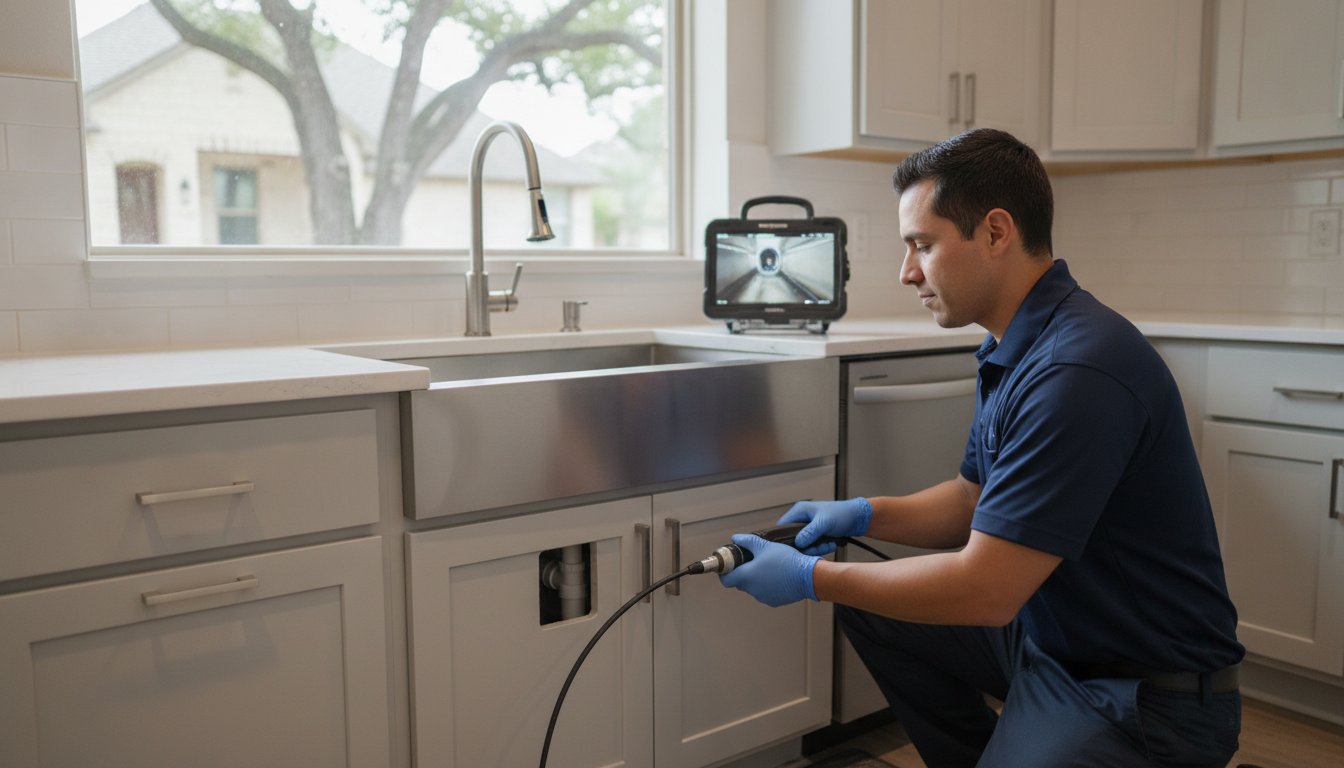
Attempting to repair internal seals yourself carries significant risks. Beyond the potential for flooding, an incorrectly reassembled valve can lead to cross-connection contamination. This is where brine or waste water accidentally enters your potable drinking water supply. When you're ready for a deep-system check, it's time to call for a licensed water softener service. We bring our collective family knowledge to every call, ensuring your system is calibrated the right way to handle our local water conditions. If you notice resin beads in your water or a unit that won't stop running, contact our team today for a reliable, professional inspection.
Choosing Local: The Garrett’s Plumbing Water Softener Standard
Our service area extends across the heart of the region, including Round Rock, Pflugerville, San Marcos, and Georgetown. We understand that your plumbing is an integrated system. A failing softener can lead to scale buildup in your pipes, which might eventually require emergency plumbing Austin homeowners want to avoid. By focusing on the health of your water softener today, we help prevent the pipe bursts and heater failures of tomorrow. We take pride in providing transparent pricing and a level of reliability that feels like a throwback to a simpler time.
The Garrett Family Commitment
Our multi-generational history is the cornerstone of our accountability. We don't just work in these neighborhoods; we live in them. This local connection drives our "no-pressure" philosophy. We believe in fixing what is broken and providing honest advice on what is not. You won't find high-pressure sales tactics or unnecessary upsells here. Instead, you'll find a Master Craftsman who treats your property with the respect of a long-term neighbor. We've spent over 27 years building a reputation for integrity, ensuring that every water softener installation Austin families trust is done the right way the first time.
Ready for Better Water?
Professional water softener service is the most effective way to protect your plumbing infrastructure, your expensive appliances, and your family's comfort. From spot-free dishes and softer laundry to a longer-lasting water heater, the benefits of a well-calibrated system are felt every single day. If your salt tank is staying full despite frequent use, or if you've noticed crusty buildup returning to your faucets, it's time for a professional eye. We are ready to bring our family's expertise to your home in Austin, Round Rock, or San Marcos. Schedule your professional water softener service today and experience the peace of mind that comes from true local craftsmanship.
Secure Your Home’s Plumbing Future
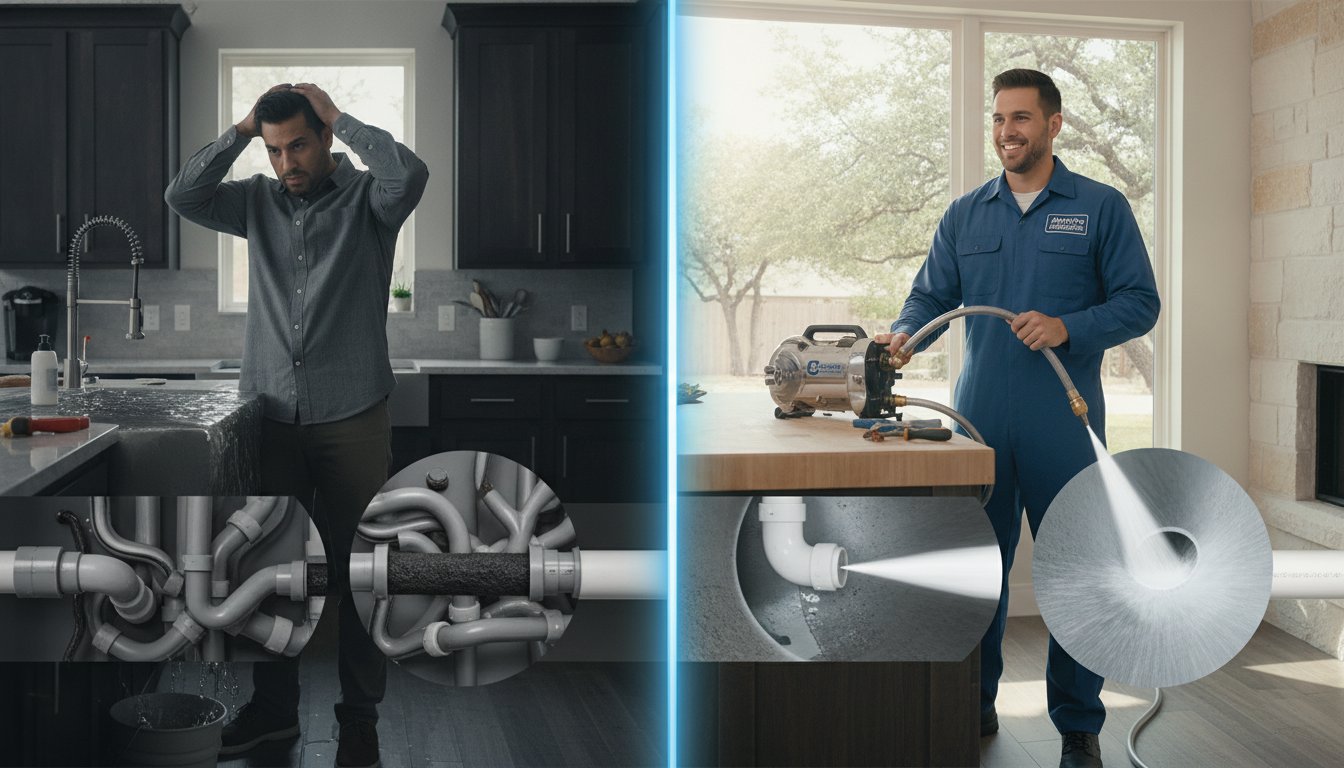
Maintaining your home's defense against Central Texas minerals shouldn't be a source of stress. By staying ahead of visible scale buildup and ensuring your brine tank remains free of salt bridges, you protect your plumbing infrastructure from the inside out. While routine salt refills are a task most homeowners can handle, the longevity of your system depends on the precise calibration and deep cleaning that only a seasoned professional can provide. It's the difference between a system that just gets by and one that thrives for decades.
Don't let hard water dictate the lifespan of your expensive appliances. Get Expert Water Softener Service from Garrett’s Plumbing today. We are here to help you keep your water soft and your home running smoothly for years to come.
Frequently Asked Questions
How often should I have my water softener professionally serviced in Austin?
You should have your water softener professionally serviced once every 12 months to account for the extreme mineral content in Central Texas. Regular maintenance ensures that the resin bed remains efficient and that the control valve settings are adjusted for seasonal changes in water hardness. This annual checkup helps prevent the "salt mush" buildup that can lead to mechanical failures and high utility bills.
Why is my water softener full of water but not using any salt?
This usually indicates a clogged injector or a salt bridge that is preventing the system from drawing brine into the resin tank. If the salt level isn't dropping, the regeneration cycle cannot complete, leaving your water untreated. A professional can clear these blockages and recalibrate the intake valve to restore proper function and ensure your home is protected from limestone buildup.
Can hard water actually damage my dishwasher and washing machine?
Hard water is a primary cause of premature failure for dishwashers and washing machines in the Austin area. Calcium deposits accumulate on heating elements and inside internal pumps, forcing the motors to work harder and eventually burn out. Maintaining a professional water softener installation Austin families trust is the best way to protect these expensive appliances from internal scale damage and ensure they last for their full expected lifespan.
Is it normal for a water softener to make a loud noise at night?
It is normal to hear water flowing or a soft humming sound if your system is set to regenerate during the night. However, loud grinding, thumping, or constant motor noise usually indicates a mechanical issue with the control head or a stuck valve. If the noise is new or unusually loud, it's a sign that the internal gears or seals need professional attention to prevent a total system failure.
What is a salt bridge and how do I fix it safely?
A salt bridge is a hard crust of salt that forms over the water in your brine tank, preventing the salt from dissolving. To fix it safely, gently tap the outside of the tank with a rubber mallet or use a blunt tool like a broom handle to break the crust. Be careful not to hit the sides too hard; you don't want to crack the brine tank wall or damage the internal float assembly.
Should I use salt pellets or crystals in my water softener?
High-purity salt pellets are the preferred choice for most modern systems because they dissolve more consistently than crystals. Crystals often contain more impurities and can dissolve unevenly, which leads to clogs in the injector assembly and the formation of salt mush. Choosing a high-quality pellet ensures a more reliable brine concentration and helps keep your system running smoothly between your professional service calls.
How long does a typical water softener last in the Central Texas area?
A well-maintained water softener typically lasts between 10 and 15 years in our region. The extreme hardness of the Edwards Aquifer puts significant strain on the resin beads over time, which can lead to a loss of efficiency. Regular professional service and using high-quality salt can help you reach the longer end of that lifespan by protecting the internal components from premature wear.
Will a water softener service help with low water pressure in my home?
Yes, a professional service can often resolve pressure drops if the issue is caused by a clogged resin bed or scale buildup inside the control valve. Over time, minerals can restrict the flow of water as it passes through the system. By cleaning the internal components and flushing the resin, we can restore the flow rate and ensure your water softener installation Austin system provides the steady pressure your family needs.

Comments