Professional Water Softener Service: The Complete Guide for Central Texas Homeowners

Updated: Jul 8
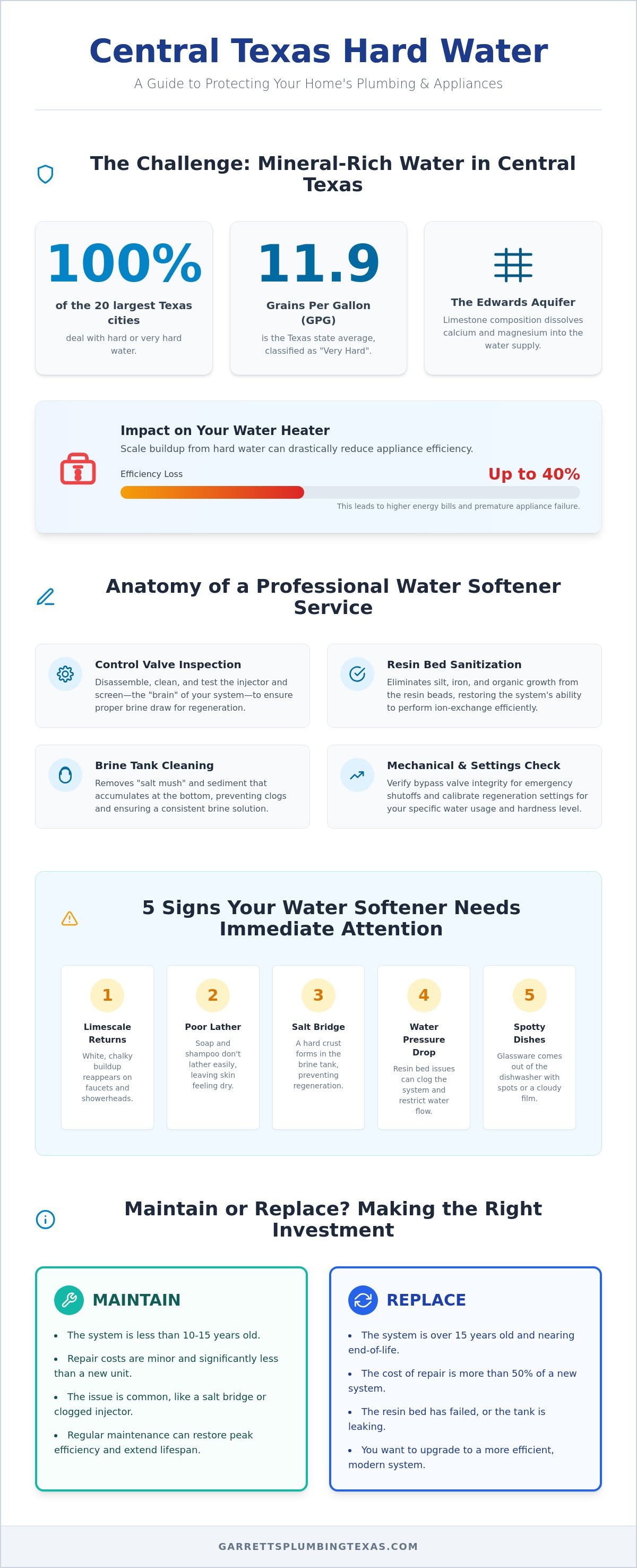
Did you know that 100 percent of the 20 largest cities in Texas deal with hard or very hard water? In Central Texas, our limestone aquifers create a mineral profile that is uniquely demanding on your plumbing. You've likely seen the evidence in the form of stubborn limescale on your expensive fixtures or felt it in the way your soap just won't lather. While these are daily nuisances, the primary reason to prioritize a professional water softener service is the hidden damage to your home's infrastructure. Research shows that scale buildup can cut a water heater's efficiency by as much as 40 percent, costing the average household hundreds of dollars every year in wasted energy and premature appliance wear.
Table of Contents
Understanding Water Softener Service in Central Texas
A professional water softener service is far more than a simple equipment check. It is a comprehensive health assessment for your home's entire filtration infrastructure. In cities like Austin, Round Rock, and Pflugerville, our water is among the hardest in the country. Data shows that 100 percent of the 20 largest cities in Texas deal with hard or very hard water. Our state average sits at 11.9 grains per gallon, which is classified as very hard. This isn't just a minor cosmetic issue. It is a constant chemical challenge for your plumbing. When we perform this work, we look at how your system is handling the specific mineral load of your neighborhood.
To truly grasp the value of this equipment, it helps to understand what is water softening? on a molecular level. Most systems use a process called ion-exchange. This swap replaces hardness minerals like calcium with small amounts of sodium. This prevents minerals from bonding to the inside of your pipes. Without this protective barrier, your home is vulnerable to the hard water plumbing problems that lead to restricted water flow and expensive repairs. A properly tuned system acts as a guardian for your pipes, fixtures, and peace of mind.
The Edwards Aquifer and Your Pipes
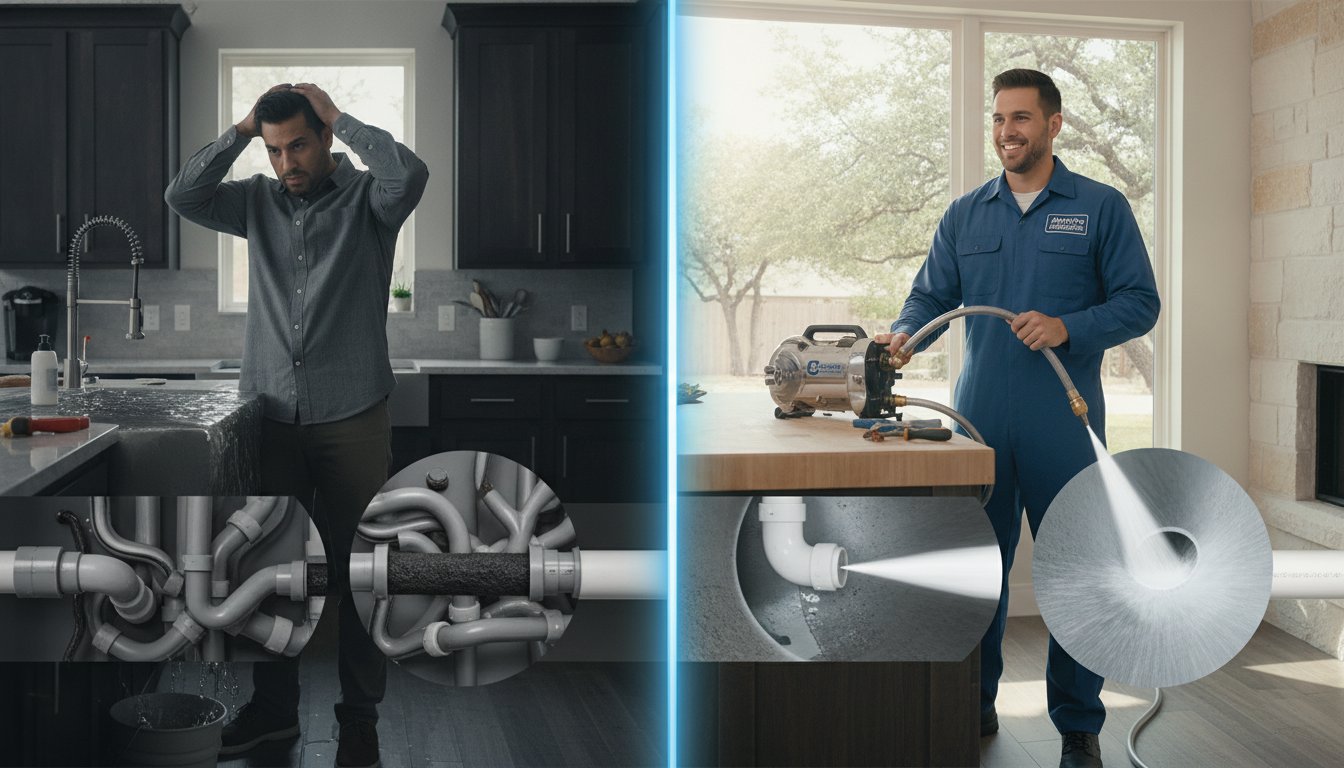
Most water in our region originates from the Edwards Aquifer. This massive underground source is composed primarily of limestone. As water moves through these layers, it dissolves calcium and magnesium carbonate. By the time it reaches your home, it is heavily saturated. While local municipal treatment plants do an excellent job of making water safe to drink, they aren't designed to remove these minerals. This leaves the responsibility of "softening" to the homeowner. Over time, these minerals crystallize inside your plumbing. They create a "rock" buildup that narrows your pipes and forces your appliances to work much harder to achieve the same results.
Why Regular Maintenance Matters in 2026
Keeping a system running at peak efficiency requires a methodical approach. In 2026, we continue to see homeowners struggle with "salt bridges." This is a hard crust that forms in the brine tank, which prevents salt from dissolving. If this happens, your system cannot regenerate, and hard water begins to bypass the unit. A scheduled water softener service identifies these issues before they cause a total system failure. Regular maintenance also protects the resin bed. If the resin becomes fouled or contaminated, it loses its ability to perform the ion-exchange swap. This is especially critical during the high-demand summer months when water use is at its highest and your system is under the most strain.
What Does a Professional Water Softener Service Include?
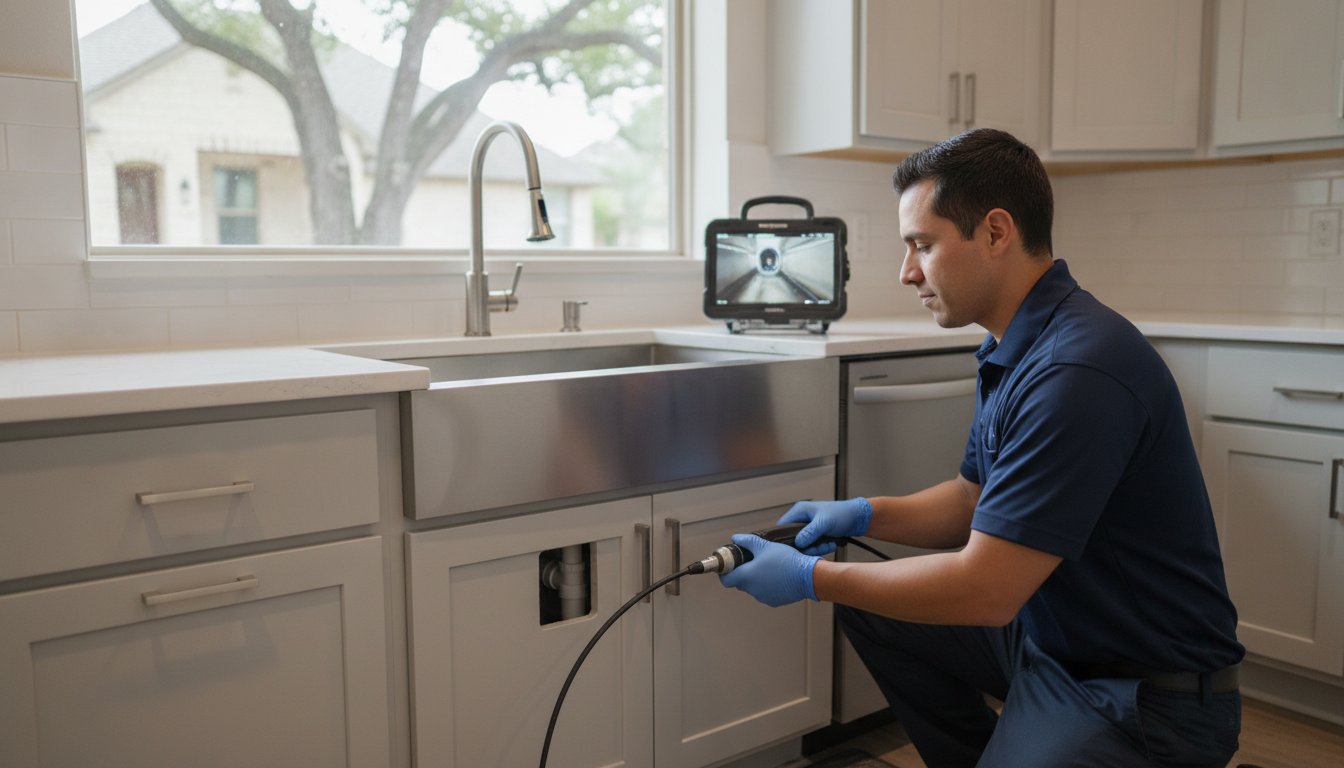
A thorough water softener service goes far beyond simply dumping a fresh bag of salt into the tank. While salt is necessary, it is only one part of a complex system designed to chemically alter your water. A professional visit is a methodical process. It involves testing, cleaning, and mechanical calibration. We approach every unit with the mindset of a master craftsman. We want to ensure that every component, from the smallest O-ring to the electronic control board, is functioning exactly as intended. This level of care protects your investment and ensures your home remains a sanctuary from the harsh effects of local minerals.
One of the most critical steps is the sanitization of the resin bed. Over time, the resin beads that facilitate ion exchange can become fouled by silt, iron, or even organic growth. This reduces the system's efficiency and can eventually restrict your home's water flow. By sanitizing this bed, we ensure your water remains clean and the system operates at peak capacity. We also take the time to scrub the brine tank. This removes the "salt mush" and sediment that naturally accumulates at the bottom. This prevents clogs and ensures a consistent brine solution for every regeneration cycle.
The Mechanical Inspection
We treat the control valve as the brain of your system. During our inspection, we disassemble and clean the injector and screen. These small parts are vital for creating the vacuum that draws brine into the resin tank. Even a tiny amount of sediment can disrupt this process. We also verify the integrity of the bypass valve. This component allows you to divert water away from the softener if needed. We check it for leaks or mineral corrosion to ensure it remains reliable in an emergency. Finally, we review your regeneration settings. We want to make sure your system isn't cycling too often, which wastes water and salt.
Water Quality Testing and Calibration
Accurate calibration requires precise data. We test your water at the source and after it passes through the softener. This allows us to measure the exact grains per gallon (GPG) of hardness. We use the scientific definition of water hardness to verify that your system is programmed correctly for the current local water conditions. If the settings are off by even a few grains, you could be using 20 percent more salt than necessary. If you haven't had your water tested recently, a quick check-up from Garrett’s Plumbing can help you dial in your settings for maximum efficiency.
5 Signs Your Water Softener Needs Immediate Repair
Homeowners often assume their system is healthy as long as they see salt in the brine tank. This is the most common misconception we encounter. A full tank doesn't guarantee your home is protected from the very hard water typical in Central Texas. If the mechanical "brain" of the unit fails or the resin bed becomes exhausted, the salt just sits there. Meanwhile, hard water flows freely into your pipes. Recognizing the subtle shifts in your home’s water quality is the first step in knowing when to call for a professional water softener service.
Learning about common water treatment methods helps you see that softening is a precise chemical exchange. When that exchange stops, the symptoms appear quickly. You might notice a metallic or "earthy" taste in your tap water. Perhaps your skin feels dry and itchy after a shower. These are not just seasonal changes. They are evidence that your system is no longer stripping away the minerals that cause these issues.
Visual and Physical Warning Signs
System Performance Red Flags
Your brine tank should tell a story. If the salt level hasn't moved in weeks, you likely have a "salt bridge" or a mechanical failure in the control valve. Conversely, if you are burning through salt much faster than usual, the system might be regenerating too often. Listen to your unit at night. If you hear it running for hours on end, it may be "stuck" in a cycle. This wastes a significant amount of water and puts unnecessary stress on your plumbing. A drop in water pressure is another red flag. This often happens when the resin bed inside the tank breaks down and creates a physical blockage. Scheduling a water softener service at the first sign of these issues can prevent a minor repair from turning into a full system replacement.
Maintenance vs. Replacement: Making the Right Investment
Deciding whether to repair an aging system or invest in a new one is a common crossroads for local homeowners. Most quality systems have a lifespan of 10 to 15 years. However, the intense mineral load in Central Texas can accelerate wear on internal seals and resin beads. We believe in an ethical approach to this decision. Our team follows a "Master Craftsman" philosophy. This means we prioritize fixing what is broken and extending the life of your current equipment whenever it is practical and cost-effective. We value the long-term trust of our neighbors over a one-time sales transaction.
Your decision impacts more than just your water quality. It directly affects the longevity of other expensive appliances. For example, a failing softener allows scale to accumulate in your plumbing, which is particularly damaging during a new water heater installation. If your softener isn't pulling its weight, your heater's efficiency can drop by 25 to 40 percent. This creates a cycle of wasted energy and premature failure. A timely water softener service can determine if your current unit is still providing the protection your water heater needs to reach its full life expectancy.
When a Simple Repair is the Answer
If your system is under seven years old, a repair is usually the most sensible path. Many issues are isolated and manageable. A faulty timer, a worn O-ring, or a clogged injector can often be addressed without replacing the entire unit. If the resin bed is still effectively exchanging ions but the control head is acting up, a rebuild is a cost-effective way to get several more years of reliable use. We often find that a deep cleaning of a neglected brine tank is all that's required to restore soft water to the home.
When Replacement is the Smarter Path
There are times when continuing to repair an old unit is a poor investment. If you see small, orange or gold resin beads appearing in your faucet aerators, the internal tank has likely failed. This is a major structural issue that usually warrants a new system. Additionally, if the cost of parts for an older, obsolete model exceeds 50 percent of the price of a new system, replacement is the logical choice. Modern high-efficiency models also use significantly less salt and water than units built a decade ago. If your system is constantly regenerating and wasting resources, upgrading can pay for itself through lower utility bills and salt costs.
If you're unsure about the health of your system, contact Garrett’s Plumbing for a transparent evaluation and professional water softener service.
The Garrett’s Plumbing Difference: Integrity in Every Drop
Four Generations of Trade Knowledge
Our business is built on a foundation of multi-generational knowledge. This historical depth allows us to solve complex plumbing issues that might baffle less experienced technicians. Being a local, neighborly business means we are personally accountable for the work we do. We aren't just a voice on a phone; we are members of your community. We take pride in our lineage and our collective knowledge. Our goal is always to build a long-term relationship. We want to be the experts you call for every plumbing need, not just a single service visit. This sense of heritage drives us to maintain the highest professional standards in every home we enter.
Ready for a Service Visit?
When you schedule a water softener service with our team, you can expect a methodical and transparent process. We begin with a thorough water quality assessment to establish a baseline for your system's performance. Our service area is extensive, covering homeowners from Georgetown down to New Braunfels. We arrive on time, provide clear explanations of our findings, and offer honest recommendations based on your specific needs. If your system is struggling with the harsh minerals of Central Texas, we are ready to restore its efficiency. Contact us today to schedule a professional water quality assessment and ensure your home remains protected.
Protect Your Home’s Plumbing Future Today
Central Texas water is uniquely challenging. It requires a steady hand and professional oversight to keep your plumbing healthy. By understanding the mechanical needs of your system and recognizing early warning signs of failure, you can avoid the costly damage caused by mineral scale. A regular water softener service is the most effective way to ensure your hair stays soft, your dishes stay spotless, and your water heater reaches its full lifespan. Our methodical approach ensures your system is optimized for our local mineral profile.
At Garrett's Plumbing, we bring four generations of professional plumbing experience to every doorstep. As licensed and insured Austin plumbers, we've remained family owned and operated since 1999. We believe in craftsmanship and long-term relationships over quick sales. Our team is ready to provide the honest guidance and reliable work you need to keep your home running smoothly. Schedule Your Professional Water Softener Service with Garrett’s Plumbing Today. We look forward to serving you and protecting your home for years to come.
Frequently Asked Questions
How often should I have my water softener professionally serviced?
You should have your water softener professionally serviced at least once a year. Central Texas water is exceptionally hard, which means your system works harder than units in other parts of the country. An annual checkup allows a technician to clean the internal components and ensure the resin bed hasn't become fouled by sediment or minerals. This regular schedule helps prevent the "salt bridge" phenomenon and extends the overall life of your plumbing investment.
Why is my water softener tank full of water?
A brine tank that stays full of water usually indicates a clog in the drain line or a failure in the brine injector. If the system cannot create the vacuum needed to draw the salt solution out during regeneration, water will continue to rise. This is a common issue that requires a methodical inspection of the valve assembly. A professional water softener service can quickly identify if the problem is a simple blockage or a mechanical failure in the float assembly.
Can I use any type of salt in my water softener?
We recommend using high purity evaporated salt pellets for the best results in our local water conditions. While rock salt is available and often cheaper, it contains high levels of insoluble minerals that can create a thick sludge at the bottom of your tank. This debris eventually clogs the injector and reduces the efficiency of the ion exchange process. Using clean pellets ensures your system operates with the precision and reliability we expect from a high quality installation.
How long does a typical water softener last in Austin?
In the Austin area, a well maintained water softener typically lasts between 10 and 15 years. The heavy mineral load from the Edwards Aquifer puts significant strain on the internal seals and the resin beads over time. While the hardware is durable, the constant chemical exchange eventually wears down the system's effectiveness. Regular maintenance is the most reliable way to help your equipment reach the upper end of that lifespan before a replacement becomes necessary.
Will a water softener help with my high water bills?
A water softener helps lower your total household costs by protecting the efficiency of your water heater. Scale buildup from hard water can reduce a water heater's efficiency by as much as 40 percent, which significantly increases your energy bills. While the softener itself uses roughly 50 gallons of water per regeneration cycle, the long term savings on energy and the extended life of your appliances provide a much better return on your investment.
What is a salt bridge and how do I fix it?
A salt bridge is a hard crust that forms in the brine tank, creating an empty space between the salt and the water. This prevents the brine solution from forming, which means your water won't be softened even if the tank looks full. You can often fix this by gently tapping the salt with a broom handle to break the crust. If this happens frequently, a professional water softener service can help determine if high humidity or the wrong salt type is the underlying cause.
Is it okay to drink softened water?
Softened water is safe for most people to drink, though it does contain a small amount of added sodium. The amount of sodium added depends on the hardness of the original water, but it's typically comparable to the amount found in a slice of bread. If you are on a strictly sodium restricted diet, you might choose to use a separate tap for drinking water or install a reverse osmosis system to remove the sodium before consumption.
Does a water softener remove chlorine and other chemicals?
Standard water softeners are designed specifically to remove minerals like calcium and magnesium. They are not filtration systems and will not remove chlorine, PFAS, or other chemical contaminants from your water supply. If you are concerned about water purity or chemical tastes, we recommend adding a dedicated filtration system alongside your softener. This combined approach ensures your water is both soft on your pipes and clean for your family's use.

Comments